These fragrances demand attention, oh yes! If you want to imagine them, think of aromatic cumulus clouds rather than delicate scented mists. Because when the perfumers creating for the Arquiste brand decide on an ingredient, e.g., orange blossom absolute, they don't dose it like apothecaries. In L’Or de Louis it's immediately clear that this note wears the crown. A golden one, of course. Who came up with this brand — enchanting in its richness of ingredients, the excellence of its compositions, and the aptness of its historical and geographical references?
He greeted me cheerfully: Dzień dobry! — spoken without a foreign accent. He sat down, smiled, and the conversation flowed by itself, bypassing the questions I had prepared earlier. We began with a brief discussion of the choice of art for the Raffles hotel in Warsaw, made by Anda Rottenberg. “I wonder if she has family in Mexico City, I know Rottenbergs there,” he said. And later we touched on another hundred topics. We only reached the story about Arquiste fragrances after a long while, because Carlos Huber, the creator of this Mexican perfume brand, was sprinkling the conversation with fascinating tales that were a shame to interrupt.
Family: a matter of identity
Coming to Warsaw is a special journey for me; my family comes from Poland. My grandfather on my father's side was born in Siedlce and emigrated in 1928 when he was 16. He followed his father, who had left earlier in 1922, fearing another pogrom (in Siedlce in 1906 a three-day pogrom of Jewish residents was organized by the Russian army; further ones occurred in the East during the Polish–Bolshevik war — ed.). He wanted to provide a safer, better life for his loved ones. He didn’t know it would be six years before he could bring the family to Mexico. My grandmother, the wife of the Siedlce grandfather, is half Lithuanian, half Ukrainian, so the culture was similar. But their manners were different. Grandfather always seemed more formal, distinguished — Polish. He passed away in 2012; I remember him well. Grandmother is alive and is 95 years old.
My mother's side of the family also has partly Polish roots; her maiden name is Suchowiecka, and those grandparents lived in Nieśwież, which today lies in Belarus. The Suchowieckis always considered themselves Polish. My grandfather tried to emigrate to New York because his brother had settled there. But when he arrived at the port he was not admitted — quotas for arrivals had already been imposed; Americans did not want more Jews or Catholics. The ship was directed to Cuba, and from Cuba to Mexico. There my grandfather found work, met my grandmother, started a family and stayed.
My mother and father didn't speak to us in Polish, but I know a few words: thank you, please, goodbye. I can count to ten: one, two, three… (Carlos pronounces the polite phrases like a Pole; counting is worse, but even so many foreigners might envy his ease with pronouncing: ten — ed.). Polishness has always been an important part of our family identity; my closest relatives behaved differently, kept different customs than Mexicans. Neighbors called us Polacos. Food was important at home. I grew up fed on dishes from the Polish–Jewish kitchen; sometimes they had different names, but that didn’t affect their taste. Uszka for borscht were called kreplech in our home, knedle were knyszes, potato pancakes — latkes. There was duck with red cabbage, there were herring, which I love.
We also looked different from Mexicans; grandfather spoke differently, had a different temperament, cooler, less extroverted than the Latin temperament. He was affectionate only in exceptional situations. He drank alcohol rarely, but even when he drank little he became a bit sentimental. I remember once he gently took my hand — I was shocked; he usually didn't allow himself to show emotions.
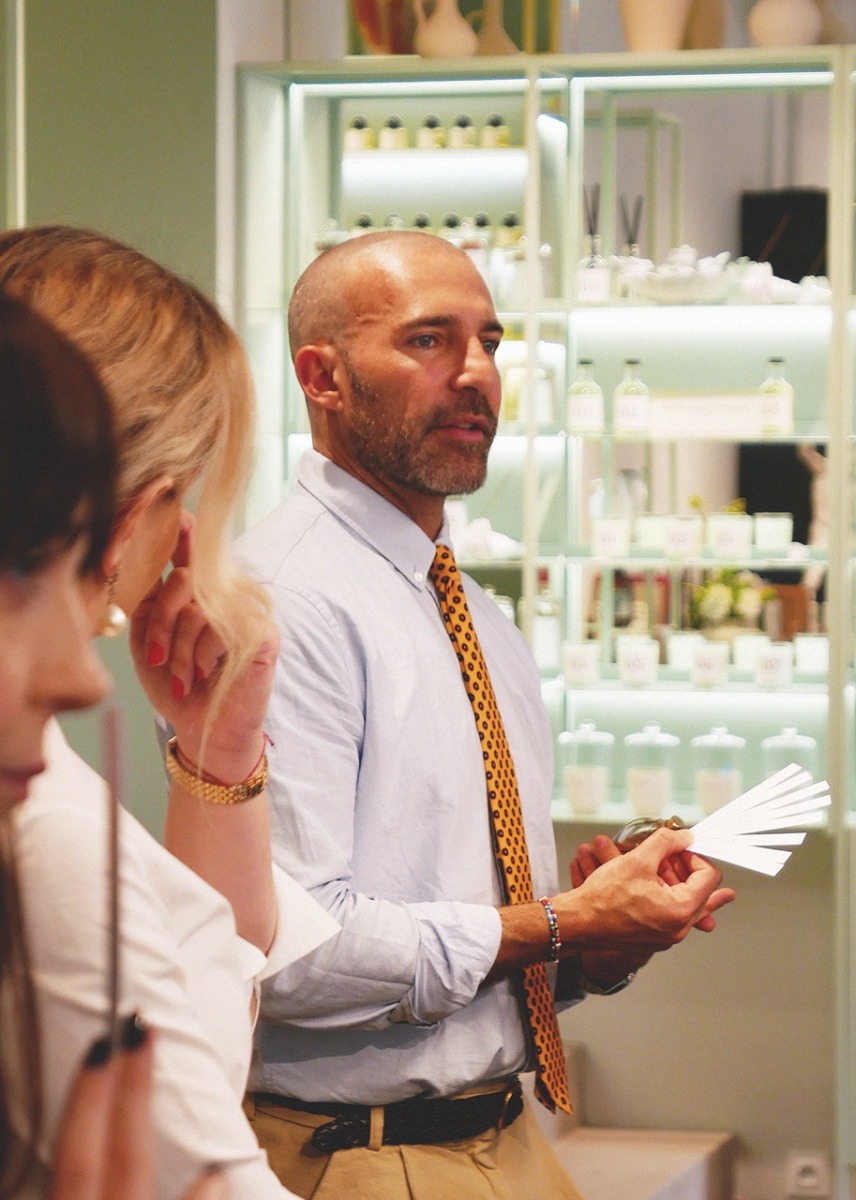
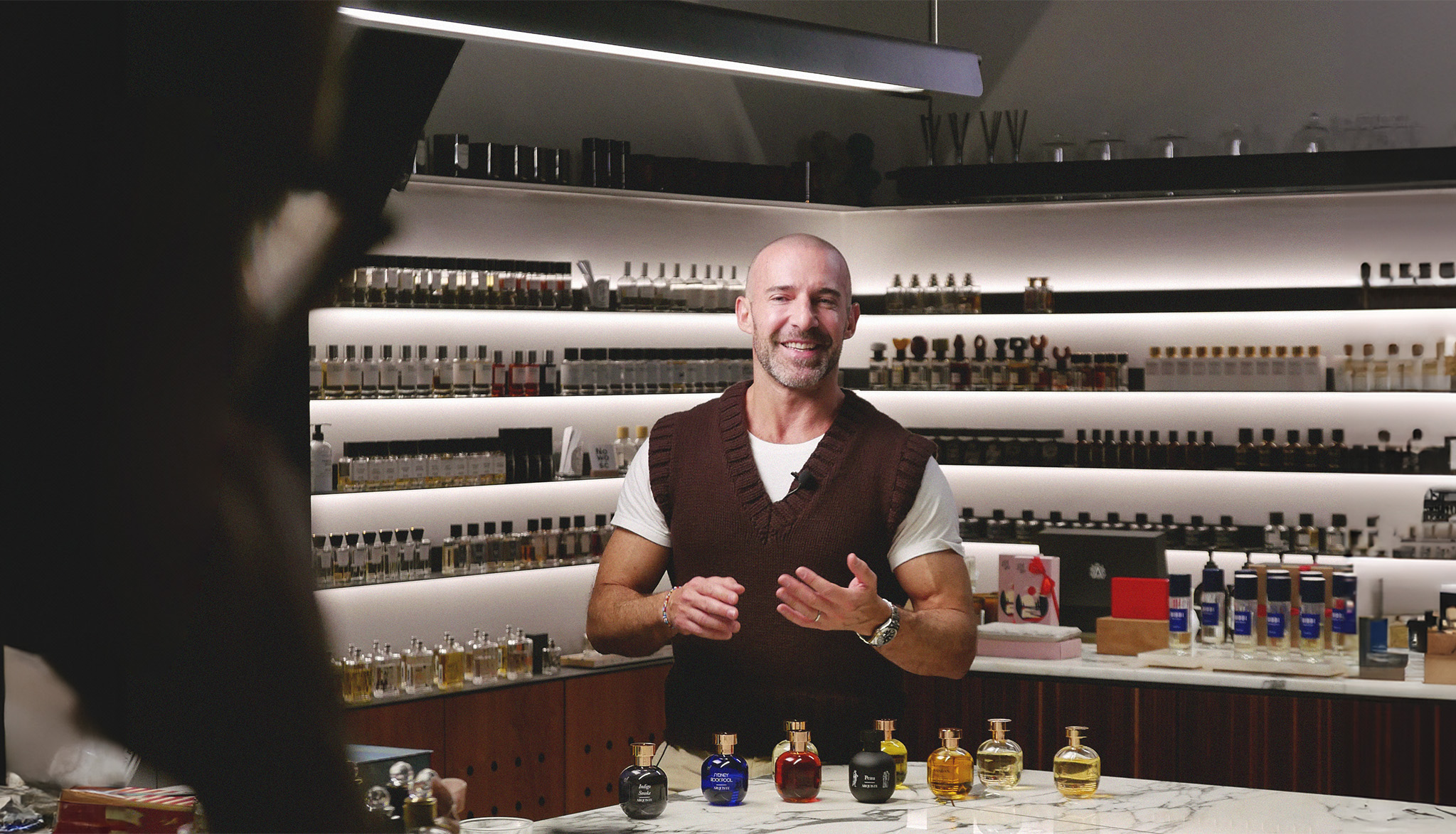
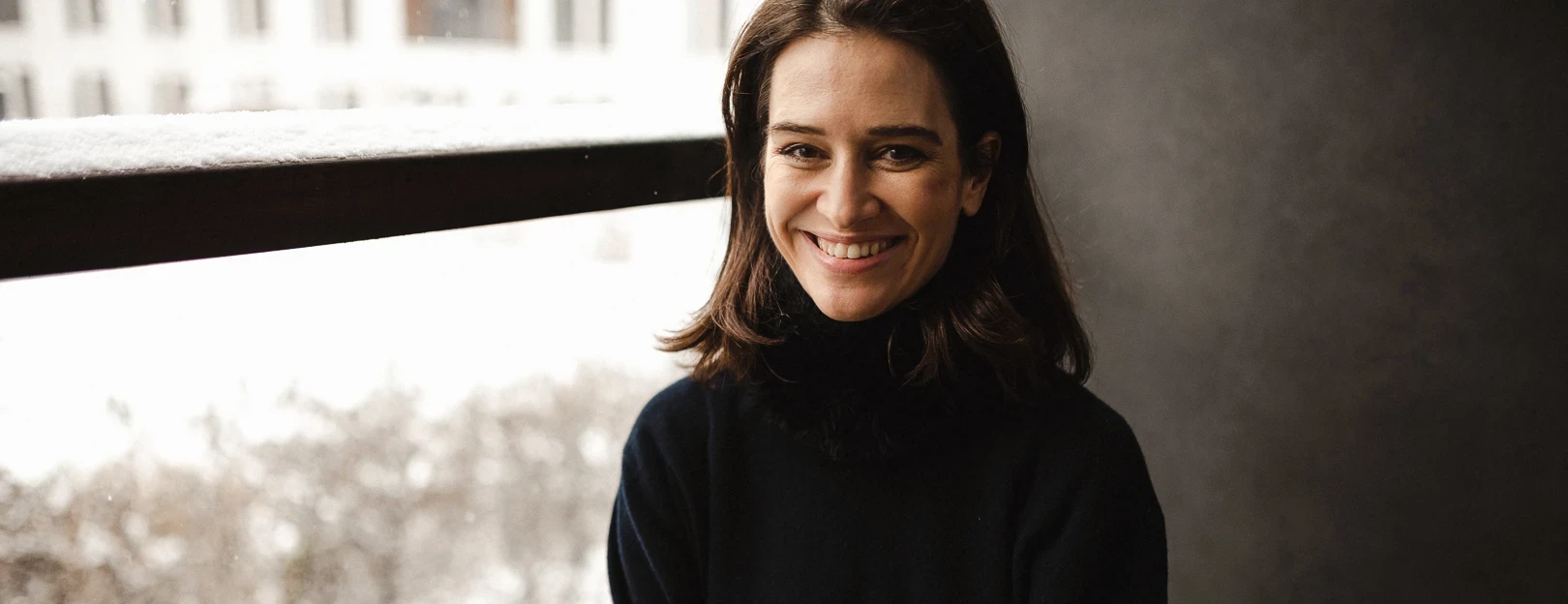
CARLOS HUBER DURING HIS VISIT TO GALIL IN WARSAW photo: Paulina Puchalska
Mexico: a good place
My ancestors arrived in Mexico at a very interesting, immigration-friendly moment. My great-grandfather came right after the revolution (1910–1920). Before it, the country was under authoritarian rule, there were huge class inequalities, but as a result of social uprising a new democratic constitution was enacted (still in force today — ed.). The country began to do better, it developed, and many people came from Europe. The government wanted to attract as many people as possible so the economy would advance. My grandfather from Siedlce told me that even advertisements encouraging people to come to Mexico appeared in Polish newspapers. After the revolution, small and large businesses developed intensively; it was a good place to build a future.
My great-grandfather had a mill in Siedlce. He arrived in Mexico with nothing. At first he sold tiles at one of Mexico City's main markets. Later, when he had earned a little, he opened a canteen. Then he traded in used cars. The late 1920s — how used could those cars be? After all, they'd only just been invented! It was pioneering activity. Finally, in the 1940s, he became a Ford dealer. My grandfather, in turn, invested in construction, in the metallurgical industry; he even owned a steel factory. He did very well, the whole family did well, they lived the American dream — only in Mexico.
My paternal grandfather cared about small rituals. Every weekend we went to a Polish or Spanish restaurant — alternating. We also went to an Austrian one because that cuisine resembled Polish food. They served red borscht with cream and mashed potatoes as a side. And we always ordered duck with cabbage. I grew up in that atmosphere: we live here, we are comfortable here, this is our place on earth, but we are not from here — we are Poles, Jews. That probably explains my interest in history. I was the one in the family who dug through archives to learn more.
My city: New York
I love Mexico, but I've lived in the USA for more than half my life. The first time I went away for an extended period was as an architecture student when I was 21. I spent a year in Paris on an exchange program, returned to Mexico for six months, passed exams and when I was 22 I left again, this time to Spain to work. After a year I moved to New York to do a master's in historic preservation at Columbia University. I finished my studies and received a great job offer from Ralph Lauren — and that's how I stayed in the States for good. I worked in architecture, but in the fashion world — a fantastic adventure. When I started, beautiful interiors for the Madison Avenue store were being created; later I also did projects for Lauren's Paris boutique. Through that job I met two perfumers who helped me create Arquiste.
But first, back in Mexico right after returning from Paris, I met Sophie Bensamou, who is a scent consultant — she teaches how to select fragrances, individual notes and how to use them, and I became friends with her. When I was already working in New York, it turned out she had moved there too. Excited that we had both landed in the States, we arranged to have lunch. Shortly after I met several people I had known during the exchange in Paris. At a party organized by some French friends I was introduced to perfumer Yann Vasnier. I told him about my friend the scent consultant, and he said: “Sophie? She's a close acquaintance of mine, we work door to door! We must have lunch together.” We met, and then both said: “There is also a Mexican perfumer, we must introduce you to him, because when he finds out we know each other and he is out of the loop, he'll be jealous.” That's how I met Rodrigo Flores‑Roux, my mentor in the world of scents.
My fascination: perfumes
When we met Rodrigo, I kept asking him ad nauseam how perfumes are made until he finally offered me a short theoretical course. I finished the lessons and asked: “What if we tried to recreate one of the historical scents? We'll find an old formula and make a composition according to it.” Rodrigo said: “Sure, we can, but you'll be disappointed. Contemporary perfumery, with new technologies, ingredients, and ways of blending them, is far more interesting than the old. Even if we recreate Marie Antoinette's perfume, you may not like it.”
I was a little disappointed, but I didn't give up. What if we mix historical notes with contemporary ones and tell a story about a specific place and time? For example, transport ourselves in imagination to an orangery in Versailles when the royal court is present. I imagined the scent of orange blossoms and rich, sensual accents — the smell of irises, civet. Then Rodrigo said: “Are you serious? Because that could be a pretty good idea for a perfume brand. Prepare a business plan.”
Initially I just wanted to make a scent for myself; I was curious about the result, because I had never worked in a laboratory and hadn't learned the practical side of perfumery. But when a professional told me I had a good idea for a brand, it clicked immediately. Maybe this is my chance to build something beautiful of my own? I thought. I know two excellent perfumers who want to work for me, Rodrigo and Yann. They are world-class specialists; they have created fragrances for Tom Ford, Carolina Herrera, Jo Malone. Such an opportunity might never come again! Then I analyzed the numbers and concluded that it's an investment, but not as big as buying a factory. (Laughs). We started to act. That's exactly what New York is — people from different parts of the world and various professions meet, get to know each other, talk, listen to each other's stories, and sometimes want to join someone else's story or enterprise. Despite all my love for Paris, I don't know whether if I had become fascinated with scents there anything more would have come of it, or whether any doors would have opened for me in France.
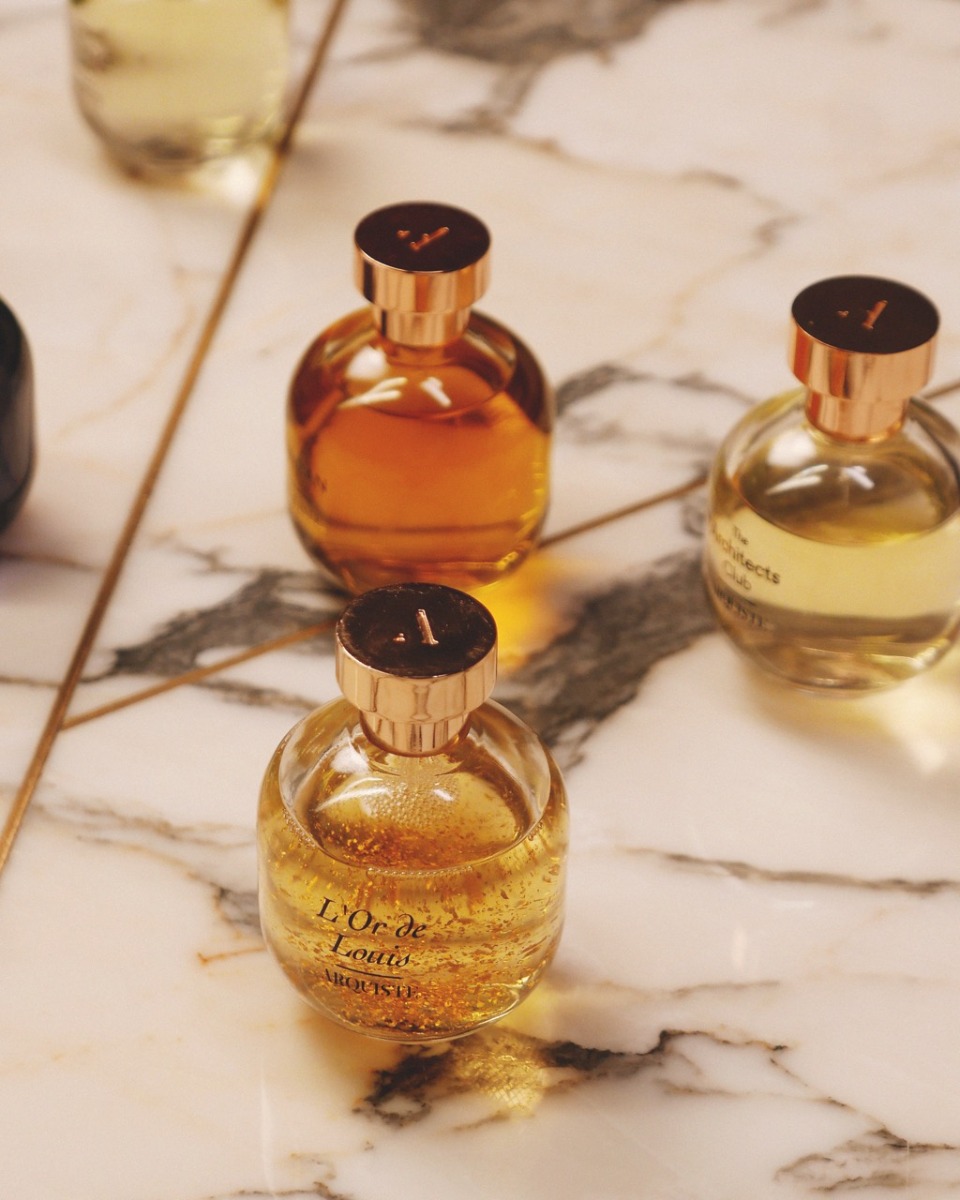
ARQUISTE FRAGRANCE COLLECTION photo: Paulina Puchalska
My brand: Arquiste
Architectural studies taught me precise planning. When we were working on the first composition, I already had producers for the bottles, boxes, ingredient suppliers, etc. As soon as the debut Arquiste fragrance, Anima Dulcis, was ready, I arranged meetings at luxury New York department stores: Bergdorf Goodman and Barneys, and they wanted to sell it. I'm still proud of that perfume. It was arranged so that as soon as you smell the first notes you think: this is something interesting, different from all the compositions I know. It's not one of those pleasant, light eau de toilettes used thoughtlessly and quickly forgotten. Anima Dulcis was inspired by my first restoration project — we were restoring the seventeenth-century royal convent of Jesus Maria in Mexico City. In the convent kitchen the nuns often prepared a spicy hot chocolate. That's why we reached for cocoa, cinnamon, cloves, chipotle peppers and incense. It's a scent that is sweet but also spicy and smoky.
All the perfumes in my brand have their source in a near or distant history. Nanban is the story of a galleon carrying exotic goods to the Americas: African coffee, Indian tea, Asian pepper, incense, Spanish leather. It's beautiful, rich, dark, addictive. Misfit smells like a dressing table set with balms and potions. Imagine the end of the 19th century, the aroma of patchouli and lavender, bergamot and the sweet beans of tonka. In The Architects Club you'll sense a gin martini — thanks to notes of juniper, white tobacco and vanilla, although not in the commonly associated sweet rendition — Yann added a dry, smoky accord.
I'm not a perfumer — that's Rodrigo's and Yann's role. My task is to design the fragrances. At Arquiste I do the work of an architect — I provide the idea, create the plan, and give the makers a precise brief. Sometimes I also prepare a visual presentation to show the place the perfume should evoke; that was the case with Anima Dulcis. I give guidance about ingredients, but in general terms; I don't go into details, more like: here I imagine patchouli, incense, vanilla. Then a meeting takes place where we discuss specifics. How they see it. I get the first proposals, we modify them until we hit the mark. I feel fully responsible for the result; I've been doing this for 12 years, I'm a full-blooded scent designer. (Carlos laughs, not hiding his pride). This is how we work at Arquiste. And it works — the results of our efforts have made many other brands want us to create fragrances for them. We've done it for Trudon, the luxury candle company, for the St. Regis Hotels & Resorts hotel chain, for the clothing brand J. Crew — in that case I was inspired by Peggy Guggenheim and her New York gallery, and for Vacation, an Australian brand unfortunately not available in Europe, whose advertising slogan is: “The best‑smelling sun‑care products.” Each time it's great fun for me.
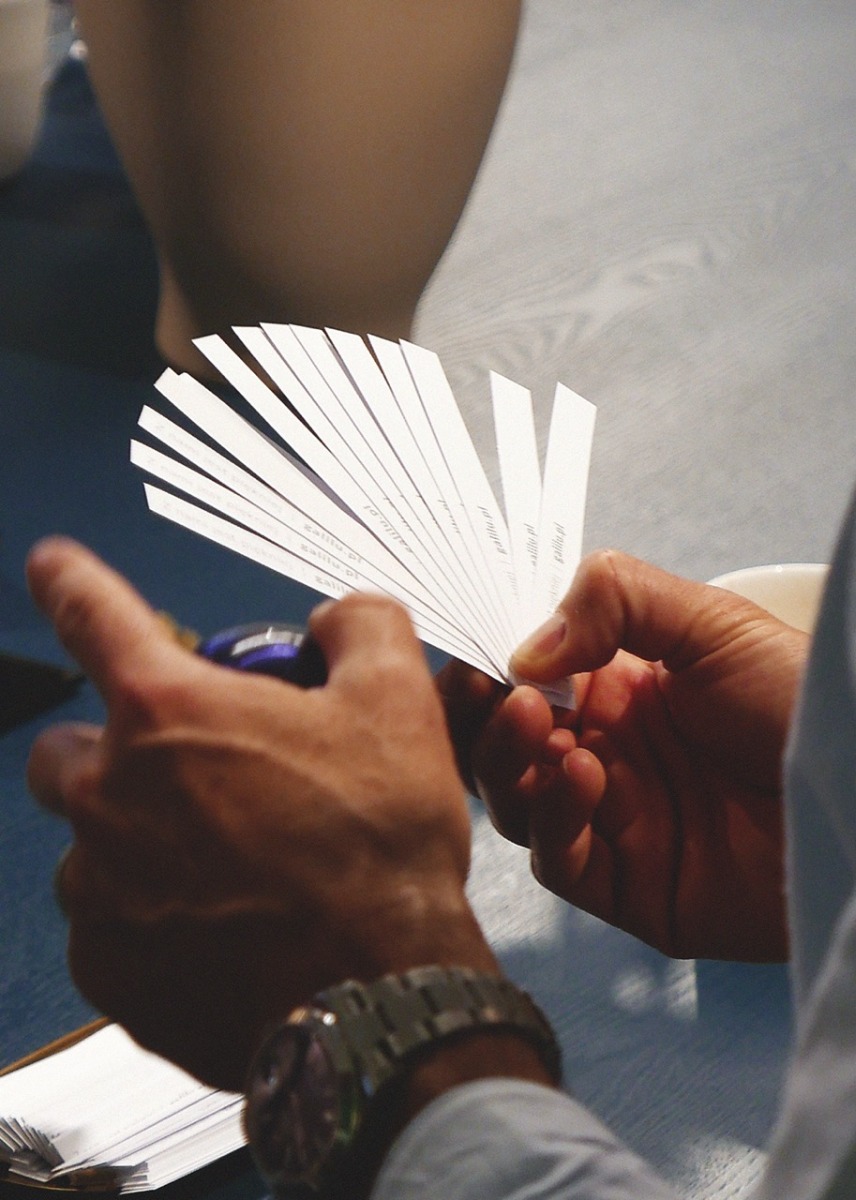
CARLOS HUBER DURING HIS VISIT TO GALIL IN WARSAW photo: Paulina Puchalska
Solid foundation: architecture
I worked as an architect for most of my youth. First in Spain for two different firms: one handled restoration, the other urban planning. I like when buildings are well designed, looking equally spectacular on the outside and inside. For example, I like the main terminal at Bilbao airport by Santiago Calatrava, except that it has no waiting rooms, so you have to stand outside… The Soumaya Museum in Mexico City, designed by Fernando Romero, looks magnificent at first glance. But I'm not convinced about the interiors. Nearby is the Jumex Museum, the work of the English architect David Chipperfield — overall excellent, elegant, functional. I respect and admire Mexican architects: Abraham Zabludovsky, Teodoro González de León, and Enrique Norten. We also had great modernists. And what a Bauhaus! All thanks to the fact that in the 1920s and 1930s Mexicans traveled to Europe, and many talented Europeans came to us and settled in Central America.
Arquiste bottles are deliberately not meant to evoke architecture. Such a design would have to be assigned to a specific period, and I wanted a time capsule that fits any moment in history, any culture, any story. In a neutral bottle you can place a scent referring to the Aztecs, baroque Paris, or contemporary Sydney. If I had come up with something too original, too avant-garde, a dissonance would appear. Besides, the bottle fits well in the hand. The glass is heavy, solid; it won’t break at the slightest knock.
Among niche perfumes I like the bottles from Matiere Premiere and Headspace. The latter resembles a vessel for perfume prototypes. The brand owner told me that few people outside the industry understand it, they simply think the bottle is awkward. Clever — a designer message for the initiated. I also like bottles from the 1990s. Maybe I’ll even create a limited series of Arquiste fragrances in packaging in that style?
Plan for the trip: Poland
For the first trip to Warsaw I wanted to go with my close family. It's so close to Siedlce, where part of my family came from. Warsaw itself also had special significance for me. Grandfather used to say it was a big, elegant city where one would go shopping or to the theater. I felt that in some way it was “our” piece of Poland. So when I received an invitation from Galilu, I was undecided; I thought it would be better to come here with my parents, my sister and brother. I wanted to see Siedlce, but I imagined that if I went there alone I might feel sad. Yet later I thought: maybe this is the opportunity? First I'll talk about Arquiste, which always brings me great joy. Isn't that a beautiful frame for a trip that will allow me to discover my family roots? So I came. I spent three and a half days in Warsaw, one and a half hours in Siedlce — unfortunately I had little to see. I went to the address where my grandfather lived before the war, but that side of the street must have been completely razed; today there is a row of apartment blocks. I took photos and sent them to my relatives. In the place where the Huber house used to be there is now a shop selling CBD vaporizers, so when I spoke on the phone with family I laughed that my grandfather's house no longer exists, but the good vibes remain.
I'll return to New York tired but also charged with positive energy. I gathered a lot of it from the people I spoke with about my brand. Creating perfumes is a fascinating process, but afterwards there's the banal commercial reality: registration, packing, distribution, etc. And it's only meeting with owners of perfumeries, with salespeople, with users of Arquiste fragrances — talking to them, their opinions about our work, their reactions — that gives me satisfaction, makes me feel fulfilled and happy. That way I know our efforts matter and bring joy — an important thing in today's world. We need moments of delight in all this chaos.
I want to return to Poland. Even before the trip I told my dad: “Listen, if I have a positive impression, maybe we’ll come here together.” Now I'm sending him photos and already planning a trip with the family. Maybe in the summer? I want them to see what I saw and feel what I felt. Besides, traveling is wonderful. I love the moment when I've cleared security at the airport — I feel like I'm in heaven then.



 Oferta

























 Proceed to Checkout