How to store perfumes to enjoy them for as long as possible?
Proper storage of perfumes will help you enjoy their scent for longer. Although, of course, not forever – you can always reach for another bottle. How should you store perfumes properly? Can you somehow extend their longevity?
16 • 07 • 2024
One would wish the wonderful scent of your favorite perfumes lasted forever. Unfortunately, over time it can lose its longevity. This is mainly an issue for people who have many bottles in their collection that are difficult to use up quickly.
The good news is that proper storage of perfumes will help you enjoy their scent longer. Although, of course, not indefinitely — you can always reach for another bottle.
How should you store perfumes correctly? Can you somehow extend their longevity? Below you will find all the most important information.
Can perfumes go bad?
Perfumes, like all other cosmetics, can go bad. However, they do not have a standard expiration date. Manufacturers do provide a PAO (Period of Time After Opening) marking, which indicates how long they will retain their scent. You will usually find it on the cardboard box, not on the bottle itself – so check this information before throwing it away.
In practice this means that the scent of perfumes after several years may become less pronounced and less long-lasting. Moreover, as time passes, their ingredients may degrade, which can lead to a change in color and even consistency.
You can assume this will happen to every bottle after about 2–3 years. Unless you unintentionally speed up the process.
That is why it is so important to store perfumes properly.
What affects the longevity of perfumes?
The longevity of a scent largely depends on the ingredients used to create it. Did you know that alcohol in perfumes serves not only as a solvent but also as a preservative? Therefore, fragrances with a higher alcohol concentration may be more resistant to spoilage.
External factors also have an influence, specifically:
Light. Exposure to direct sunlight can accelerate the breakdown of fragrance ingredients.
Temperature. Extreme temperatures (both too high and too low) can negatively affect the longevity of perfumes.
Humidity. Damp places, such as the bathroom, are not suitable for storing perfumes.
Air. Frequent contact with air can lead to oxidation of ingredients, which changes their scent and reduces longevity.
The most important rules for storing perfumes
Spoiled perfumes are a real disaster, especially if it happens to your favorite scent compositions. But you have the power to avoid this unpleasant outcome.
What does proper perfume storage entail? Check the most important tips:
Always store perfumes in their original packaging. Although it's hard to imagine someone would want to transfer them out of their bottles, which often match the beauty of these amazing scents, we mention it for formality. Perfumes are best stored in their original packaging. Bottles are designed to protect the contents from external factors.
Remember to close the bottle after each use. Air contact with the bottle's contents can accelerate oxidation of the perfume ingredients.
Avoid shaking the bottle. This can also introduce air into the perfume and speed up its oxidation.
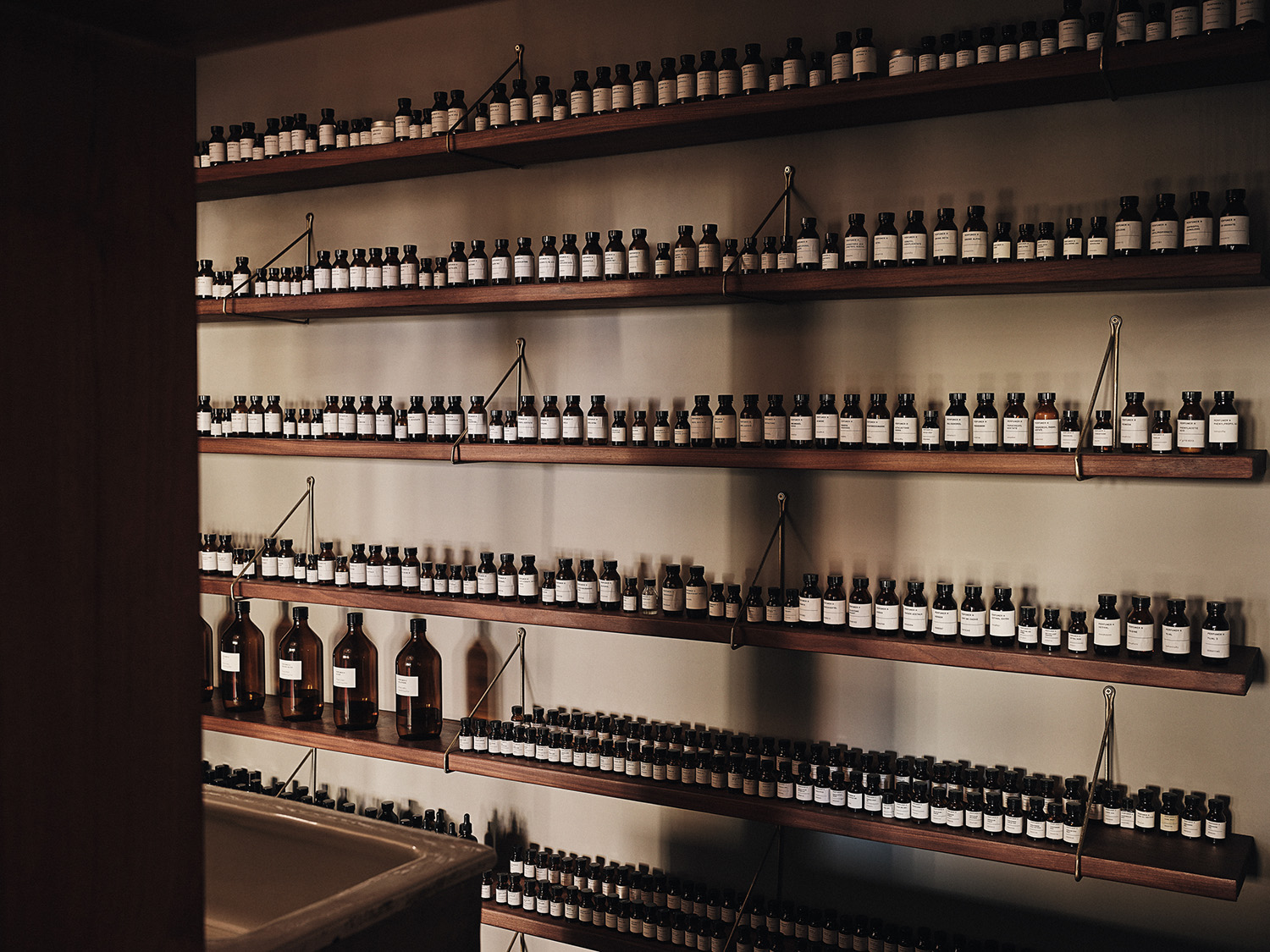
Do not expose perfumes to sudden temperature changes. Avoid storing perfumes where they're exposed to such changes – e.g., in a car. Keep them at a constant temperature. The ideal temperature for perfumes is around 15–20°C. Note that perfume bottles are often made of dark glass to protect the contents from UV light. This is not only an aesthetic choice but also a practical protective measure.
Use your perfumes regularly! This prevents their unnecessary, prolonged storage. And when your favorite scent runs out, you can always visit our perfumery and reach for the next one.
Where to store perfumes?
Wondering where exactly to keep perfumes to extend their longevity? Here are some of our suggestions:
Keep perfumes in a closed cabinet or drawer, away from windows and radiators. This will provide protection from light and extreme temperatures. It's the simplest and best solution, ensuring you won't keep your favorite scents in unfavorable conditions.
If you have a room in your home that is naturally cooler, such as a cellar or pantry, it can be an ideal place to store perfumes.
In extreme cases, when the ambient temperature is very high, perfumes can be stored in the refrigerator. However, it's important to avoid extremely low temperatures, which can negatively affect some fragrance ingredients.
Properly stored perfumes allow you to enjoy your favorite scents for as long as possible. Remember that they do not fare well in direct sunlight and are happiest at room temperature.
How can you tell that a perfume is no longer suitable for use?
If you notice that your favorite scent has changed color, it may be a sign that the ingredients are starting to spoil.
Spoiled perfumes can have a sour or metallic smell.
The appearance of sediment or cloudiness in the liquid may indicate that the perfume is no longer suitable for use.



 Oferta































 Proceed to Checkout