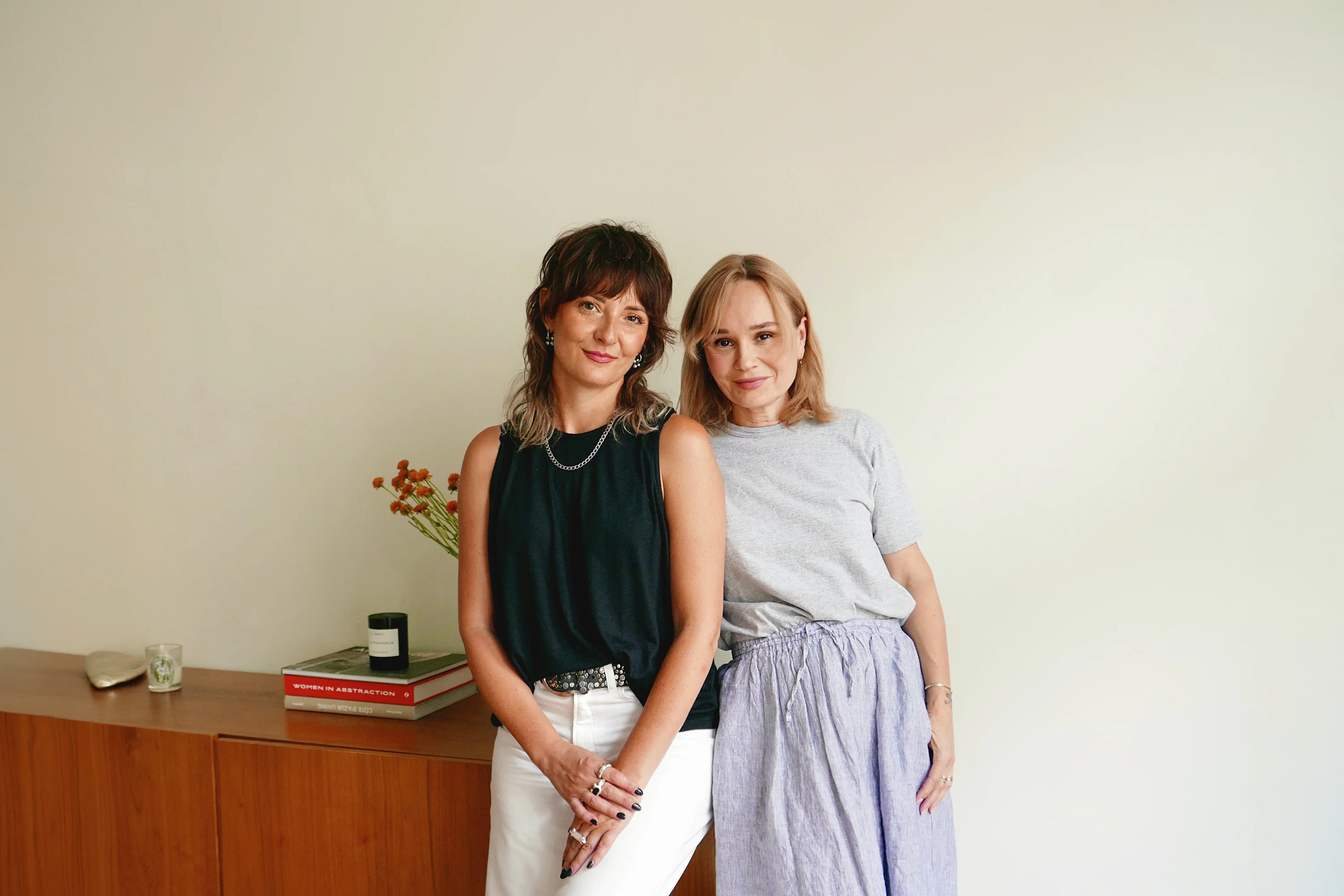
Agnieszka: Do you remember how you ended up at Galilu in the first place?
Ania: At the time I was living with my friend Zuzia. She once came back from a photo shoot and said she had met two women who had just opened a new place and were looking for someone to work. On Sunday she took me for a walk along Krakowskie Przedmieście to show me Galilu. I looked at the window and thought: “Wow”. A moment later I said out loud: “I’ll never get a job here”. The Hotel Europejski looked completely different then than it does today, and Galilu’s window really stood out among Warsaw places. It was a completely different space. Bold, a little intimidating. And that huge black chandelier. I remember it to this day. I had the feeling I was peeking into another world. It wasn’t a shop. It was an experience.
Agnieszka: And yet you came to the interview…
Ania: But believe me, I hesitated for a long time. I was working at Vistula then. I handled merchandising and training for salespeople in stores across Poland. In hindsight I see that experience was very useful to me. I remember our first meeting perfectly. You were wearing a blue dress – or a blouse – and had a tattoo on your arm. I thought then: “This is my person”. It was a small detail, but it made a huge impression on me. I sat on that famous white sofa, which looked more like a work of art than a piece of furniture. I looked around and kept thinking: “I have no chance”. I didn’t know that world. I didn’t know those brands. I knew practically nothing about skincare or perfumes. And yet November 2, 2006 was my first day at Galilu.
Agnieszka: I also remember that interview clearly. You said then that you were studying law and working at Vistula. I thought that was a very unexpected combination. We were a four-person team then. We had the first shop, a few brands, one table and a tiny office behind a glass wall that one day simply cracked. To this day we don’t know why. Looking back, I think we weren’t really building a company yet. We were creating a place we ourselves wanted to keep coming back to.
Ania: For me the biggest challenge back then was knowledge, or rather the lack of it. I remember you printed out tons of materials about Aēsop, Ren and Dr Sebagh and said: “Read. But above all: test.” It was fantastic. I went home, opened the cosmetics and immediately confronted theory with practice. It was a completely new approach. I also remember you telling me that Ren might be a brand for me when I told you about my skin problems. It wasn’t about selling a product. It was the first encounter with someone who really listens to the customer. And I think that’s when I understood that Galilu would never be a place where you simply sell cosmetics. From the start relationships were being created here.
Agnieszka: That period at the Hotel Europejski was a beautiful time, although from the beginning we knew the building was due for renovation and we wouldn’t stay there long. I still remember walking with Warynia through backstage corridors across the hotel to lunch at the U Kucharzy restaurant. It felt a bit like moving through a theatrical set. Then came the time on Burakowska – a bigger space, treatment rooms and the possibility of further development. That’s when we increasingly felt that fragrances needed their own space.
Ania: I remember you telling me you dreamed of a perfumery dedicated exclusively to scents. Not another shop, but a place where people would come for conversation, emotions and the discovery of perfume. Everyone then linked cosmetics with perfumes, and you already knew those were two completely different worlds. I feel that was when the Galilu we know today began to take shape.
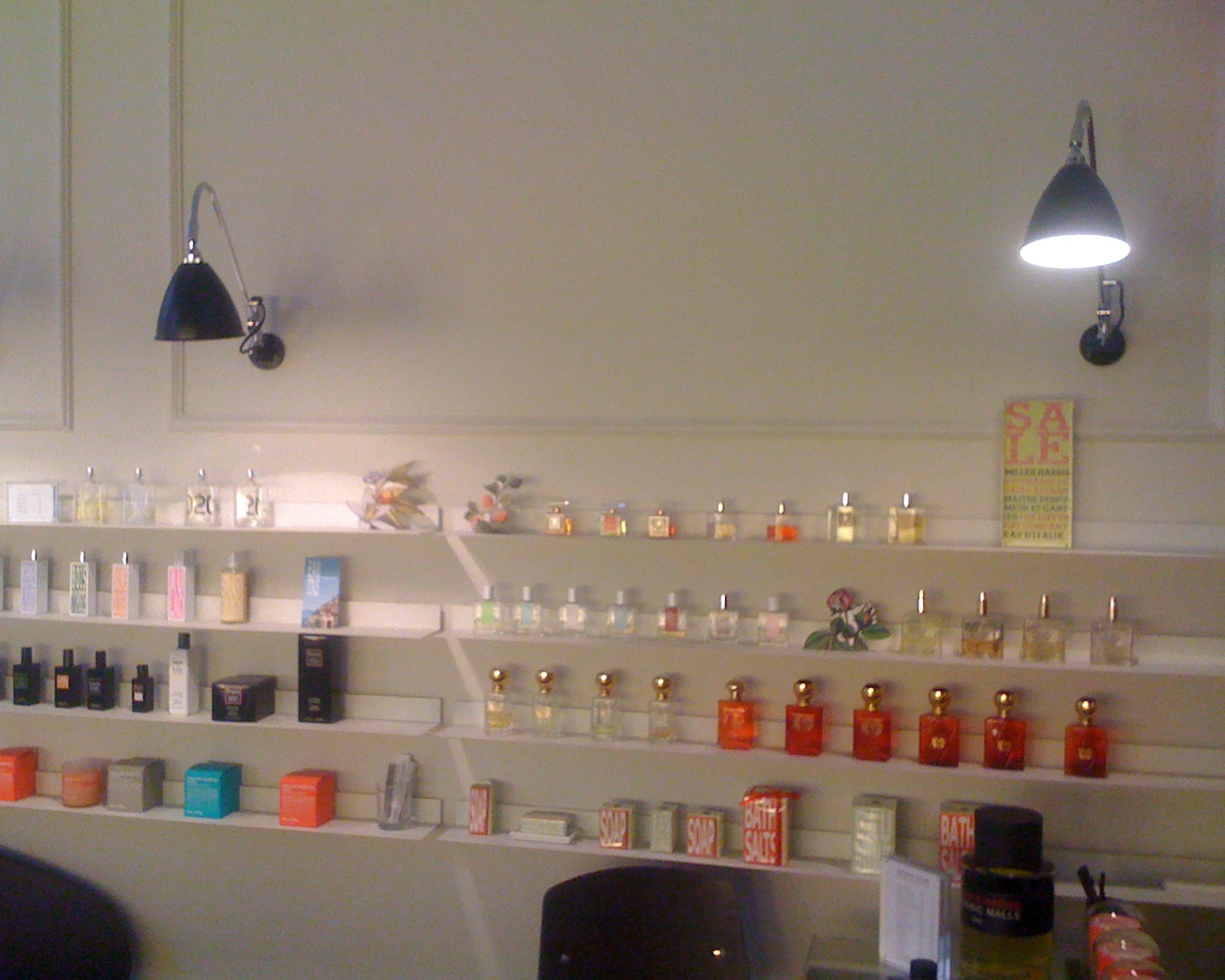
Agnieszka: That was the moment we realized that skincare and fragrances speak completely different languages. Skincare is based on ingredients, research and effectiveness. Perfumes are a story about emotions, memories and imagination. That’s how the idea for Mokotowska 26 was born. Today it sounds natural, but at the time it was quite a crazy decision. Niche perfumeries practically didn’t exist.
Ania: I remember the opening day. Wednesday. A navy dress. The first guests. The table that is still with us today. Still without the distinctive backlit display. Not many brands, but each chosen with great conviction. It was a place with a soul.
Agnieszka: From the start we and Warynia wanted to create something more than just a perfumery. We looked for inspiration in Paris, Milan and London. We were fascinated by places like Colette, 10 Corso Como and Space NK. They showed that retail can be a cultural experience. Atmosphere, architecture, conversation mattered. We wanted to bring that philosophy to Warsaw.
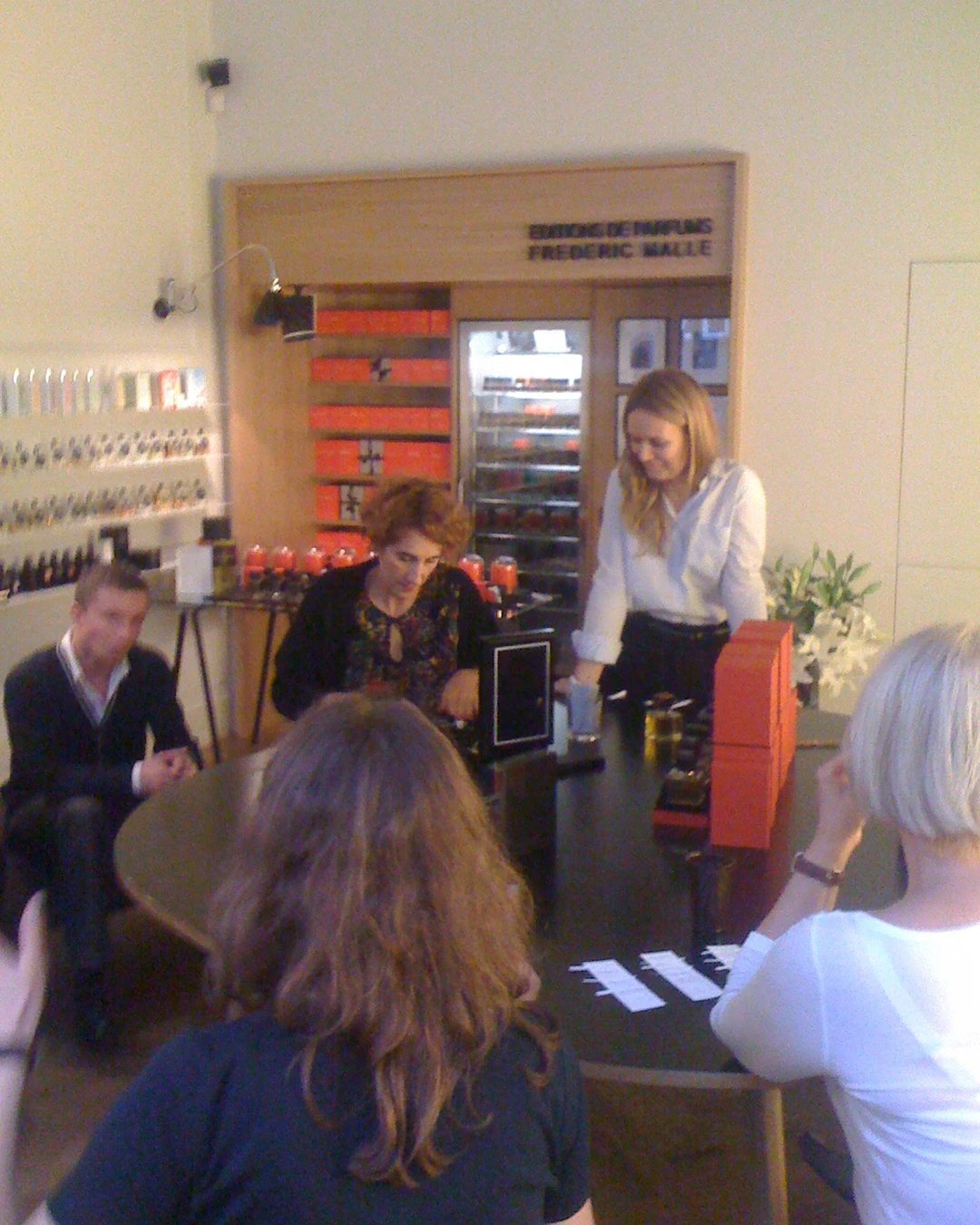
Ania: And you could feel that. Not just in the decor. Above all in the way we talked about scents. For me, however, the breakthrough moment was meeting Marta Siembab.
Agnieszka: Marta reached out to us herself. She noticed a few scent descriptions on our website and offered to train us. We spent two intensive days with her – first at my place, then at Warynia’s home. She arrived with suitcases full of oils and educational materials. I still remember the scripts she prepared. They were probably over a hundred pages. The history of perfume, fragrance families, ingredients, compositions… Suddenly everything began to fall into a coherent whole.
Ania: And what I remember most is the sentence: "Don’t be afraid of your own associations." Marta said there are no wrong answers in perfume. If a scent reminds someone of wet asphalt after rain, holidays at their grandmother’s or a freshly sharpened pencil, that’s exactly the point. Those are their emotions. You don’t need to use big words. You don’t have to pretend to be an expert. You must be authentic. That one sentence triggered something in me and I think that’s when I really fell in love with perfumes.
Agnieszka: Looking back I think we had one more rule from the beginning. We never wanted to carry brands just because they were trendy. Each had to move us in some way. Thanks to that we built an assortment over the years that we truly believed in. And although a few brands are no longer with us, I remember them all. One of the most important to me personally remains Frederic Malle.
Ania: I remember your determination to have that brand at Galilu and the endless trips to Paris. Many people think such brands just appear on perfumery shelves. Back then it was a really long road.
Agnieszka: I think for about four years we regularly traveled to Paris and each time we heard: “Not yet”. Looking back now it’s funny, because the brand was small then. Frederic Malle had a few boutiques and very limited distribution. But from the first meeting we knew we wanted to work with it. There was something incredibly authentic about it.
Ania: The first time I went to Paris with you and we entered Frederic Malle’s boutique, I felt I was in a place I understood perfectly, even though I was seeing it for the first time. I remember the distinctive testing booth: a minimalist interior, calm. Nothing distracted from the perfumes. I thought then that this place had exactly the same philosophy you were building at Galilu. I also remember standing at the shelf choosing the scents I liked most. A consultant came up to me and asked why those. I pointed to two bottles. He smiled and said: “You chose the father and the son.” I had no idea about that. I simply trusted my nose.
Agnieszka: And it’s precisely stories like that that build a relationship with a brand. Not ads, not campaigns, but people, meetings and conversations.
Ania: It was similar with acquiring many other brands that later proved to be huge successes, like Diptyque, Byredo, or Escentric Molecules. Today it’s hard to imagine the perfume world without them. But back then they were a bold choice.
Agnieszka: Especially Escentric Molecules. It was a brand many people simply didn’t understand. Two scents. A minimalist concept. No classic fragrance pyramid. I remember Galilu was one of the first places in the world where it was introduced. It shows how much we trusted our own intuition.
Ania: To this day I tell the story at trainings about one of our clients. She used to come to Galilu from Łódź. One day a policeman stopped her. She rolled down her window and instead of giving her a ticket, he just asked: “Excuse me… what are you wearing?” And she answered: “You can only buy this at Galilu.” I love that story. Because it best shows the phenomenon of Escentric Molecules. It was a scent that started conversations.
Agnieszka: Looking at the last 20 years, I think we were incredibly lucky. We chose brands that over time became global bestsellers, although we never tried to predict trends. We simply chose things that delighted us. And I think that’s how our customers learned to trust us. And above all we were incredibly lucky with the people who created Galilu with us. When I look at you today, I think about the road you’ve traveled. You came to us from a completely different world: suits, merchandising, law studies. You had nothing to do with perfumes. I remember you with your notes, with samples – you tested everything. You came back with more questions. Then I realized that knowledge isn’t a matter of experience. It’s a matter of curiosity.
Ania: I think it was simply the first time I was doing something that really fascinated me. I had never felt that before. People often say they spend their whole lives looking for their place. I found mine at Galilu. It was one of the most important moments of my life. I was given a chance and I was given trust.
Agnieszka: For many years you said Galilu was a place where you felt safe and could be yourself. I remember you running around the shop in a silk shirt and heels. And customers who would come in just to ask: “Is that the woman with the big eyes?” – it was beautiful. Because you built your own relationship with them. They returned not only to Galilu. They also returned to you.
Ania: For me the most important thing was that I could get to know people. Every conversation was different. Every scent opened a completely different story.
Agnieszka: And that’s why later it was so hard to “take” you out of the shop. I knew how much you loved contact with customers, but at the same time I saw you had another extraordinary skill: you can teach. Not just pass on knowledge. You can infect others with your passion.
Ania: I resisted it for a long time, but over time I realized I could do exactly the same thing, just differently. Today I teach people to talk about perfumes. I watch how they then build relationships with customers. How they find their own language. And that gives me great satisfaction. Because I feel I pass on everything I once received.
Agnieszka: In a way we swapped roles. Once I taught you. Today you teach the next people who come to Galilu. And I think that’s what company maturity is about. Not the number of stores. Not the square meters. But that knowledge and values are passed on.
And when you think about those first moments of Galilu today... What do you miss most?
Ania: Probably the pace. That everything was a bit slower, we had more time to talk. Customers often just popped in to sit, not only to buy perfume. I still find that atmosphere on Koszykowa. That’s why I like going back there. For me it’s a small fragment of the old Galilu.
Agnieszka: I think each of us carries a bit of that nostalgia inside. It’s natural. But at the same time I never doubted that we had to grow. Not because we wanted to be bigger. Because the world changes: people, brands, expectations change. Our responsibility is to grow with them. And at the same time not lose what everything began with.
Ania: And I think we managed to do that. Despite many changes, what was always most important hasn’t changed: the relationship with another person. That’s what makes people come back.
Agnieszka: When I sometimes hear that Galilu is no longer niche, I smile. For me niche never meant a small shop or a specific address. Niche is a way of thinking. Curiosity. Mindfulness. The courage to choose the unexpected. And respect for the customer. If that hasn’t changed, it means we are still the same Galilu.
Ania: I guess that’s why after twenty years I still feel at home here.







































 Proceed to Checkout