O zapachu
Patchouli and its wonderfully bad reputation
She burst onto the perfumery scene, only to vanish from it for almost a century soon after. She was sometimes the scent of monarchies, as well as of poets and courtesans. The signature of bohemia and a mark of youthful rebellion. Ambiguity is her middle name. And her greatest strength.
Text: Galilu
30 • 11 • 2022
The magic of contradictions
Sensual, heavy, seductive, repellent… One can say almost anything about the scent of patchouli. Except one thing — that it is bland. For some it enchants with a dense, exotic note, for others it evokes the smell of a musty cellar. There are those who wear it like a second skin, others who discreetly step away from someone who smells of it. It is a scent that leaves no one indifferent.
In a drop of patchouli we find a kaleidoscope of impressions — from the aroma of tropical gardens, through the scent of damp earth, the woody smell of smoke and a heavier, almost oily camphor, to an irritating note of mold — a powerful semantic challenge for enthusiasts. The verbal gymnastics they undertake to replace mildew associations with a poetry of epithets produces impressive results. What of it, when there will always be someone who asks: "What is that musty smell?"
Yet dismissing patchouli's character in this way would be unfair. Because it is a scent that like no other carries a wealth of associations, not only sensory — it also carries social and cultural connotations. Over the centuries the reputation of patchouli perfumes has sometimes elevated them to the salons, at other times thrown them into the gutter. So it is not a straightforward image. But perhaps that is precisely why the scent has retained its vitality to this day, still seeming unexpected and intriguing. In the perfume market such qualities are a power.
Time of conquests
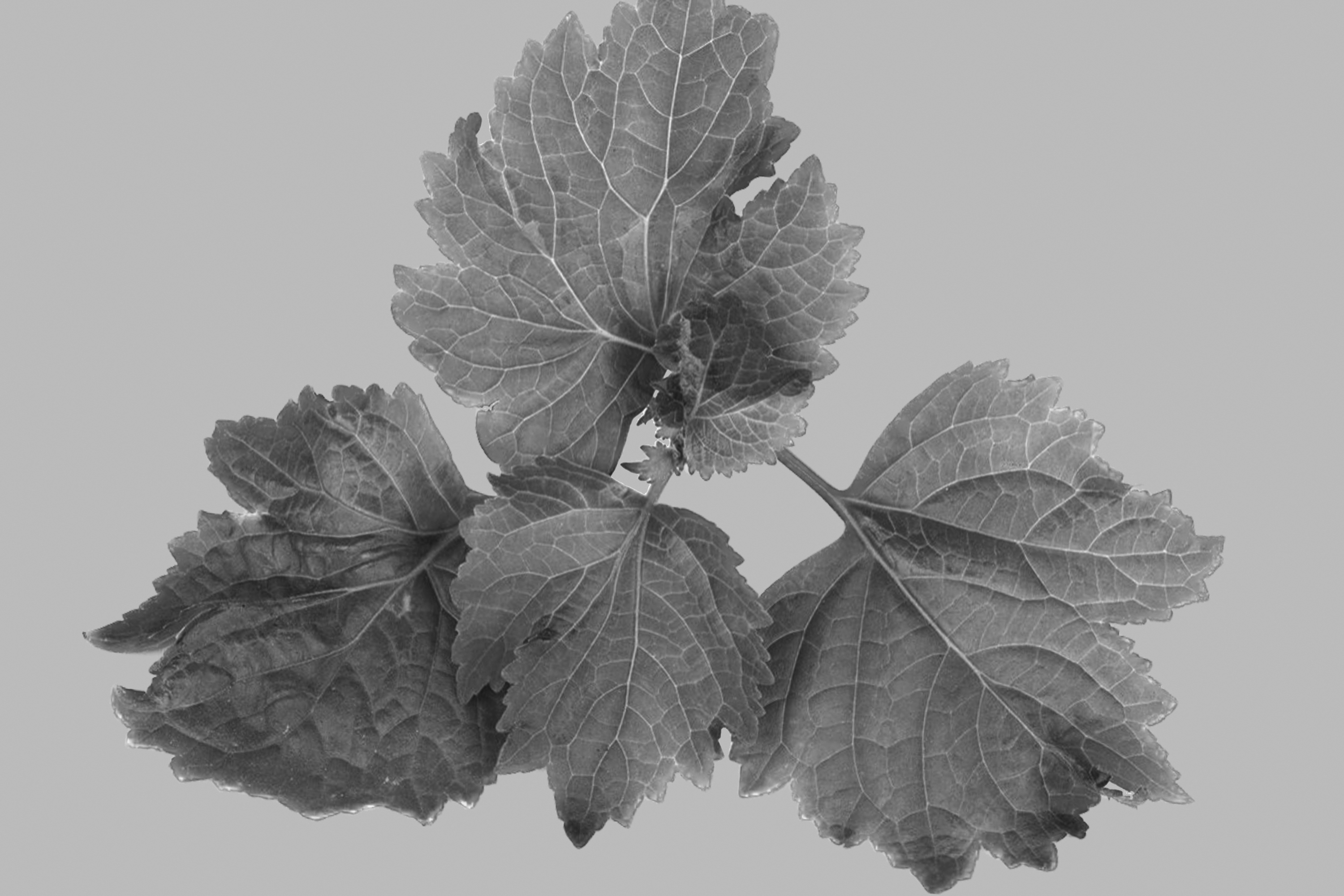
It began modestly — a shrub with jagged leaves, known in Asia for centuries as a source of an essential oil with medicinal and cosmetic properties, reached Europe in the second half of the 19th century as a moth repellent. India was then an inexhaustible source of cashmeres and silks, which without anti-moth protection would not have survived the long weeks of travel. Merchants from boutiques near the Paris Opera, which received the imported fabrics, quickly noticed that some shawls sold better than others. They exhibited a secret power — women tried them on with obvious delight, leaving the shop wrapped in the fabric, unable to part with it. It turned out that behind the sales figures was not so much the look of the shawl as its… scent! We can assume that this was the beginning of olfactory marketing, and nuances of smell, previously ignored, for the first time revealed themselves to merchants as a topic worthy of consideration.
A time of social ascent for patchouli followed — the intoxicating heavy aroma delighted not only the bourgeoisie. It was also used by crowned heads, such as the wife of Napoleon III, Empress Eugénie. In the process perfumers discovered previously unknown properties of patchouli — the ability to impart freshness and to fix fragrances. As a result the oil became — and remains to this day — a base ingredient of many compositions, even those that in sensory perception have little to do with it.
Decadence and decline
Fashion for scent, however, can be capricious and as fleeting as the fragrance itself — after a while patchouli simply became overused in high society. People complained that it was heavy and intrusive, that it caused migraines, stripped women of class and an aura of innocence, that it smelled "dirty" or simply stank. At the end of the 19th century the scent recently adored by the elites was associated solely with decadence and decay. The murky sensual aroma naturally weaves into the bouquet of Baudelaire's Flowers of Evil and blends with the haze of hashish and opium that enveloped the outlaw poets and their admirers at the time. From there it was only a short step to the demi-monde. Courtesans enthusiastically adopted the perfume, appreciating its sensuality, ostentatious boldness and practical longevity. Patchouli, christened by the fin de siècle as the scent of love, even as the smell of the bedroom and sex, disappeared from luxury perfumery for many decades.
At the beginning of the 20th century it returned, mainly as a component of men's eau de toilettes. In times when women in most countries were still unsuccessfully fighting for the vote, the heavy smoky note was identified as decidedly masculine. One that spoke of travels and conquests, emphasized strength with a "rough" character, and combined best with the smell of cigar smoke.

CARLO MOLLINO - L’occhio magico di Carlo Mollino. Photographs 1934-1973
The Summer of Love
Patchouli had to wait almost half a century for its infatuation, but when it came, it was total. Its peak of popularity came in the mid-1960s — the time of the hippie sexual revolution and great social changes. It was then, first in the United States and then in Europe, that the most favorable circumstances for the sensual scent appeared. The Flower Power generation freely mixed stereotypes in the melting pot, blurring gender boundaries, mocking taboos and juggling symbolic conventions. A boy could finally ditch the rifle, grow his hair long and weave flowers into it, a girl could behave and dress "like a man". And she could smell that way too.
A strong impulse came from the hippies' fascination with the East — young people returned from pilgrimages to India and Nepal with backpacks full of patchouli leaves and marijuana, hoping that the intense aroma of the former would mask the scent of the latter. But from the perspective of the Children of the Flower the aroma had other virtues — it fit perfectly with the climate of protest and contestation. Liberated girls no longer wanted to live, look or smell like their mothers — proper housewives armed with mixers and permanent waves, exuding commonplace lily-of-the-valley and violet perfumes. Patchouli — symbolizing the deeply rooted spirituality of the Orient and a return to nature, themes embedded in New Age philosophy — proved to be an excellent argument.
Industry, as industry does, reoriented itself quickly — patchouli, once a suspect substance associated with something cheap and tacky, transformed into an exclusive hit. In the 1970s the most respected perfume houses entered the race for compositions dominated by a patchouli note. The market was conquered successively by the exquisite, artistic Patchouli by Réminiscence, the rich, aromatic Aromatics Elixir by Clinique and finally the unforgettable, explosive Opium by Yves Saint Laurent.
The scent of the underground
Late to trends, as in everything else, Poland was unaware of patchouli until the turn of the 1970s and 80s, when the Solidarity carnival loosened borders and somewhat unfastened the regime's corset. And although more than a decade had passed since the Summer of Love, the scent also became a symbol of independence here. It was different, unlike anything we had smelled before, so it worked perfectly as a calling card for alternative artists, underground activists and their many sympathizers. In a country isolated by martial law, perfume smuggling worked extremely efficiently; almost everyone then smelled of patchouli. Many a meeting where banned films were screened and samizdat books exchanged was shrouded in a dense and sweet, woody-camphorous haze rivaled only by a cloud of cigarette smoke.
Precarious stability
Today, after the period of overuse has passed, patchouli has reached a state of balance. That does not mean it has ceased to provoke controversy. It is no longer a stigma of rebellion or licentiousness, but from time to time its ambivalent nature and turbulent past damage its reputation. When Carrie Bradshaw, the heroine of the cult series Sex and the City, arrives at a party inappropriately dressed, she declares: "Suddenly I felt like I was wearing patchouli in a room full of Chanel". Carrie, regarded as a style icon, this time however makes a huge mistake — patchouli in the 21st century defends itself precisely with those traits that once earned it a bad reputation. It is appreciated by the most discerning, most demanding noses. And it still remains an ingredient of many perfumery bestsellers.



 Oferta
































 Proceed to Checkout