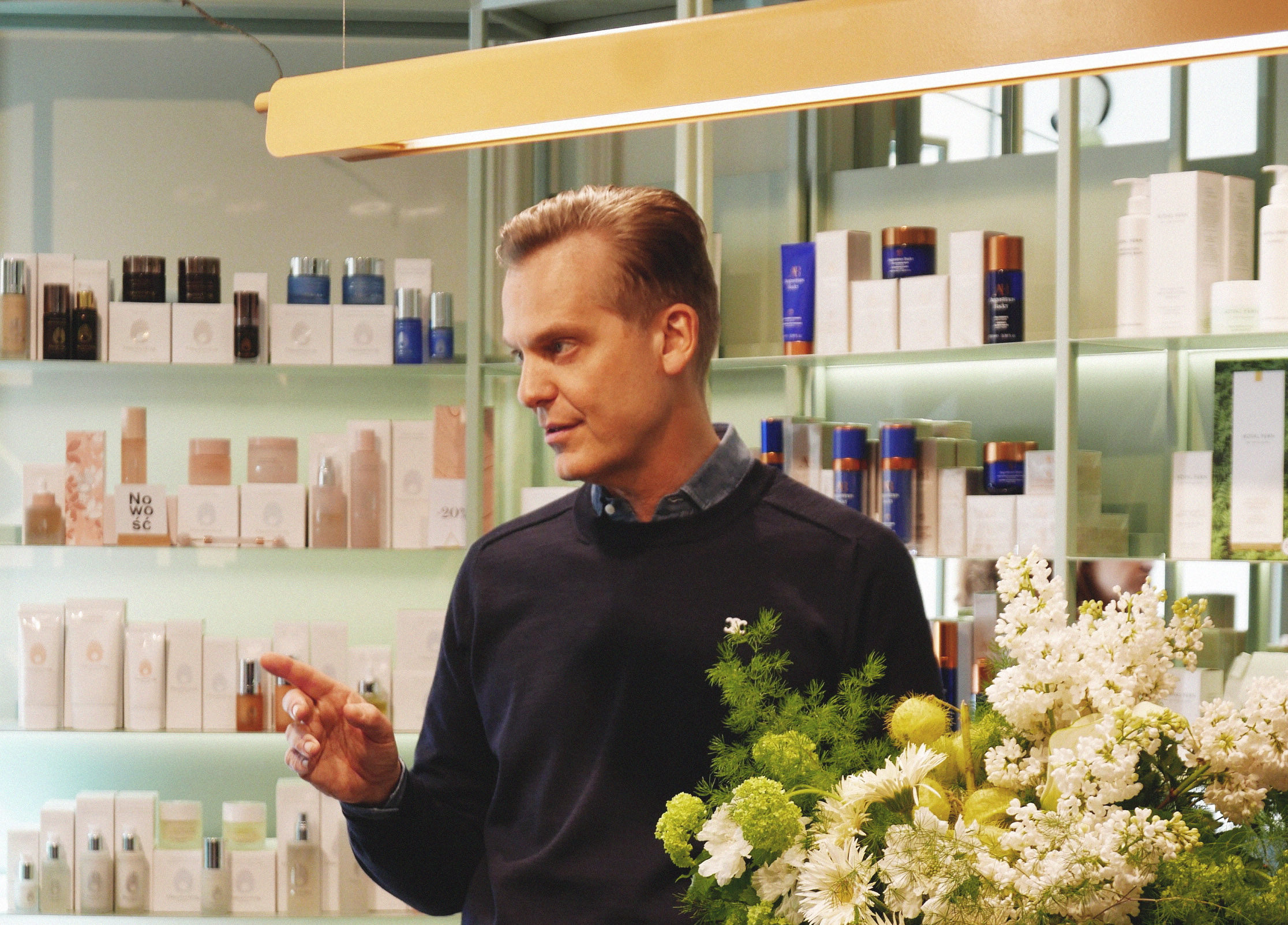
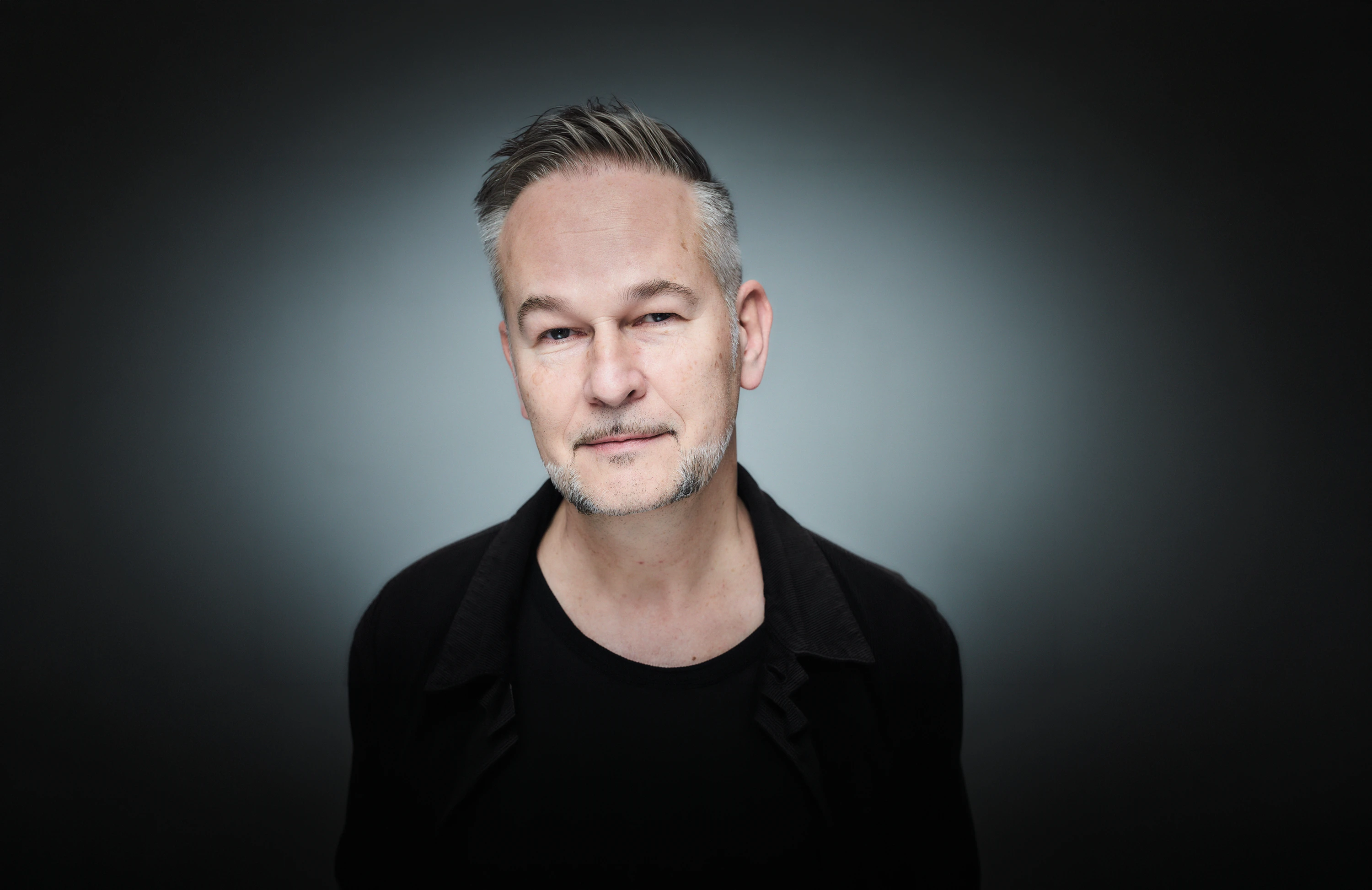
Dr Timm Golueke is not only a specialist in creams. Without hesitation he says how important skin health is to him. In Munich he runs a dermatology clinic, where he treats patients on a daily basis. People come to him with atopic dermatitis, allergies, eczema, psoriasis, acne and rosacea as well as many other conditions. After finishing therapy they all receive cosmetic recommendations. Some patients bring boxes full of products they used and ask him to advise what to keep and what to stop using. Dr Timm is happy to help them with this – he believes that home skin care is part of the key to success. Skin that has been treated and properly cared for can cope with many problems on its own, will effectively defend itself against external factors and age more slowly, more attractively. It will also respond better to beautifying or rejuvenating therapies if someone decides to undergo them.
The Royal Fern cosmetics do not refer in their name to your medical education, but to the most important ingredient, an extract from a particular species of fern, Osmunda regalis (English: royal fern). Why did you decide on that?
It's not an ordinary ingredient! It started when, thinking about creating my own cosmetics, I was looking for natural substances with research-proven, positive effects on the skin. I came across information about the efficacy of an extract from the royal fern by chance in a medical journal. The article described the positive effect of this substance as an adjunct treatment in patients with melanoma. I decided to look for other studies. I found them and learned that it is a powerful antioxidant that counteracts the effects of intrinsic (genetic) and extrinsic (environmental) aging. I wanted to see what could be obtained from this remarkable plant. And whether it might be the ideal ingredient for a dermatologist.
How long did it take to develop a form of the extract that works in cosmetics?
With a team of chemists and pharmacists we worked on it for four years. Eventually we managed to obtain an extract that delivers maximum effectiveness in various types of products. We added other natural molecules to further strengthen the protective properties of the fern's cells. And we “packaged” everything in liposomes, so the ingredient reaches where it should and is released gradually in the skin, providing long-lasting action. Royal Fern Complex – as it is officially called – is such a valuable and innovative substance that we patented it.
However, this important ingredient is not the only one on which the effectiveness of Royal Fern cosmetics is based.
We combine it with other substances of proven efficacy: vitamins C and E, retinol, hyaluronic acid, plant oils and butters. Each time we ensure that all ingredients are compatible with each other and work together in the product for the benefit of the skin. For example, in products for people with problematic skin we add: zinc – for its anti-inflammatory action, tranexamic acid to reduce scars, and willow bark extract (a natural salicylic acid) which cleanses and reduces the appearance of pores.
Where do you get ideas for new products? Do you watch the market, travel to industry fairs?
They all come from medical practice. In my clinic I see patients with various dermatological problems every day and create cosmetics that will later help them in their daily care. I want to ensure effectiveness even outside of a medical setting. That's important, because a product only works if it is used regularly. And it will be used regularly if applying it is pleasant.
You are a respected specialist worldwide in preventing skin aging. What portion of your practice do you devote to treatment versus aesthetic dermatology?
Rejuvenation procedures account for about 50% of visits to my clinic.
Your favorite?
Botox. I enjoy doing it and I use it myself. A well-executed treatment should produce a natural result, not block facial expression, but simply smooth and relax facial features – as if you had just returned from a successful vacation. Excess makes you look artificial. Fortunately, the global trend is that treatments with botulinum toxin or fillers are performed more frequently than a few years ago, using smaller doses. That pleases me, because especially in younger people, too much filler or botox does not improve appearance but makes the face lose character and individuality, resembling other faces altered by treatments. It's also hard to tell how old such a person is – 30, 40, 50? Probably that's not the point…
What new rejuvenation treatments have you recently introduced in your clinic?
We recently started working with polynucleotides delivered by injection. This is a new method of biostimulation intended to make the skin once again efficiently produce elastin and collagen. Polynucleotides are molecules naturally present in our RNA and DNA. The preparation containing them is fluid and is injected very superficially into the skin. It works well across the whole face, including the delicate areas around the eyes – it effectively reduces dark circles. It accelerates the production of supporting fibers; the skin becomes firmer, thicker, and as a result dark circles are less visible. Polynucleotides are also suitable for stimulating the scalp and weakened follicles when hair thinning occurs.
My number two: exosomes. Tiny molecules that naturally exist in our bodies and play an important role, among other things, in intercellular communication – they convey important messages to nearby and distant cells.
How do they act on the skin?
For example, they “tell” lazy fibroblasts: now you have to produce more collagen in a specific place. And they do! In the USA and the UK you can use exosomes derived in the laboratory from human cells. In the European Union this is prohibited – in finished products we use only synthetic exosomes. In my opinion rightly so; I would not want material from another person in my body. In cases of life-saving procedures like transfusion or transplant, that's another matter. But just to look better, younger? Additionally, recently we have the option of obtaining exosomes from the patient’s own blood; they are separated in a similar way to platelet-rich plasma. They are administered by injections, although I prefer to use a mesotherapy gun for this purpose. I have not yet tested this method on myself, but some members of my team have tried it – they are all alive and look great (laughs). For those who do not like dermatological procedures there are also cosmetics with plant-derived exosomes, but I am not convinced of their efficacy.
In that case, which new cosmetic ingredients convince you?
It’s worth realizing that substances proven long ago in clinical studies still work excellently. In my opinion there is no point in seeking the newest ingredients or procedures at all costs, but rather choosing the most effective ones. For example, after thousands of substances and cosmetic brands that have appeared on the market in the last ten years, we finally understood how important protecting the skin’s natural barrier is. As a result, probiotics, though not new in themselves, have started to play a new, more important role in cosmetics. At Royal Fern we have a rejuvenating product – Retinol Solution, in which we combined liposome-encapsulated retinyl palmitate with probiotics to strengthen the skin and protect it from irritation. In September a new product will debut – Barrier Solution. It will protect the barrier thanks to a combination of ceramides and probiotics. We added tranexamic acid to this duo because it has excellent anti-pigmentation properties and lightens acne scars; willow bark extract, i.e. a natural form of salicylic acid; and of course royal fern extract, one of the most powerful natural antioxidants.
Your cosmetic prescription for beautiful and healthy skin?
For rejuvenating action, we should use cosmetics with antioxidants daily, with retinol (at night) and sunscreens, preferably mixed: chemical-mineral; the latter also protect against light emitted by computers and smartphones. But it’s not only cosmetics and procedures that determine how the skin looks. Our mental state matters too. Stress and low mood contribute to faster skin aging and disrupt its proper function. They can cause puffiness and dark circles under the eyes, a grayish skin tone, breakouts, and dryness. Therefore I think it's better to eat a piece of chocolate or cake and be happy with life than to completely eliminate sugar from the diet – which contributes to the destruction of the skin’s supporting fibers – and have a terrible mood. Too low a level of happiness hormones is as harmful as glycation. Bad habits are another matter, but occasional sweets are not a sin against healthy skin.
What do you think about the longevity trend?
Do you mean that we want to live even longer and remain fit and attractive until the end? From a medical point of view we are not certain what helps and what doesn't. It's a new field, so when you see a product labeled “longevity beauty”, I recommend caution. It's worth checking whether its efficacy is supported by appropriate clinical studies or whether it contains patented ingredients. It also matters where it is made. Products manufactured in the European Union must meet higher standards than, for example, those produced in the Far East. Many of my patients – thanks to online shopping – import cosmetics from Asia, including natural sunscreens or oils. They are cheaper than European ones, that's true, but whenever I hear the question of why good skincare products cost so much, I answer: because research on ingredients and the product itself is expensive. Big brands that produce hundreds of thousands of units can spread that cost. Small ones that want to do everything properly – test, examine, use the highest quality substances – have less room for maneuver.
On the other hand, dermatological procedures, even those using cutting-edge technologies, are becoming more affordable. And they provide quick, spectacular results. How do you see the future of skincare in this context?
Procedures and cosmetics are not the same. I always tell people who spend a lot of money on rejuvenating dermatological treatments but do not use good creams. Sure, you can pair more expensive products with cheaper ones – like in fashion. But you should not do without them. The best thing you can do is consult an expert about what is really necessary. Peels, lasers and other dermatological treatments help rejuvenate the skin, but they also damage its natural protective barrier. Therefore it needs additional nourishment, hydration and protection – and that's what cosmetics provide. To achieve the best results, when for example you remove pigmentation with a laser, you should also invest in a cream that lightens spots and definitely in a good sunscreen. Neither cosmetics alone nor procedures alone will give as good a result as when used together. Even the right facial cleanser matters. Most of us live in big cities. It's important to cleanse the skin of all the harmful substances that settle on it throughout the day. If you don't do that well, the best skincare products will not work as they should.
So, how many cosmetics should I use every day?
I'm not a fan of Korean skincare that requires 20 products or more. But if someone enjoys it and sees positive effects – that's great. Remember that Asian women's beauty is also due to dermatological procedures and makeup. When I was in South Korea a few years ago, I saw how it really looks: lots of problems with blemishes, acne, and oily skin. The picture is not as beautiful as we see in advertisements. To cope with it, they invent fantastic makeup products and perfect techniques for using them.
We are in Europe…
…and we need: a good facial cleanser – never skimp on this product! If you wear makeup, additionally a product for eye makeup removal, as that is the hardest to remove. A product with sunscreen, a preparation with an antioxidant, with retinol, a lighter day cream and a richer night cream. People with acne-prone skin or pigmentation must add a product specifically designed for their skin type. If it contains an antioxidant, one product can be omitted. You can also use the same cream for day and night. In total that's 5–6 products.
What about supplements for youth, beauty, beautiful skin, hair and nails – are they necessary?
They are not the only solution. A well-balanced diet and a healthy lifestyle can do a lot. Supplements help provided you choose those whose efficacy and safety are confirmed by studies. They should be combined cautiously because individual substances can weaken or amplify each other's effects. Additionally, we do not know to what extent they reach the skin, which is at the very end of our internal digestive chain. And the best supplement won't help if someone smokes and abuses alcohol – the skin does not like that.
And rejuvenating masks using LED light?
I use one every day! Today, before I came to speak with you, I also had a ten-minute session. You just need to choose a mask from a reputable company that…
…has studies confirming its effectiveness.
Yes (laughs). And remember that – like most skincare products – it only works when used regularly. The best ingredients, technologies and treatments won't help if there is no consistency.









































 Proceed to Checkout