A Marseillais, that is a Frenchman with Italian traits. A contemporary romantic, meaning someone who believes in the power of intellect but is fascinated by mysticism and the dark corners of the human soul. Trained as an architect, though essentially a versatile artist—he photographs, writes, designs. And invents perfumes. The first fragrance of the eponymous brand Liquides Imaginaires Philippe Di Méo created in 2011 to "clear the energy around him." The ritual apparently worked—the fragrances and he, their creator, found success.
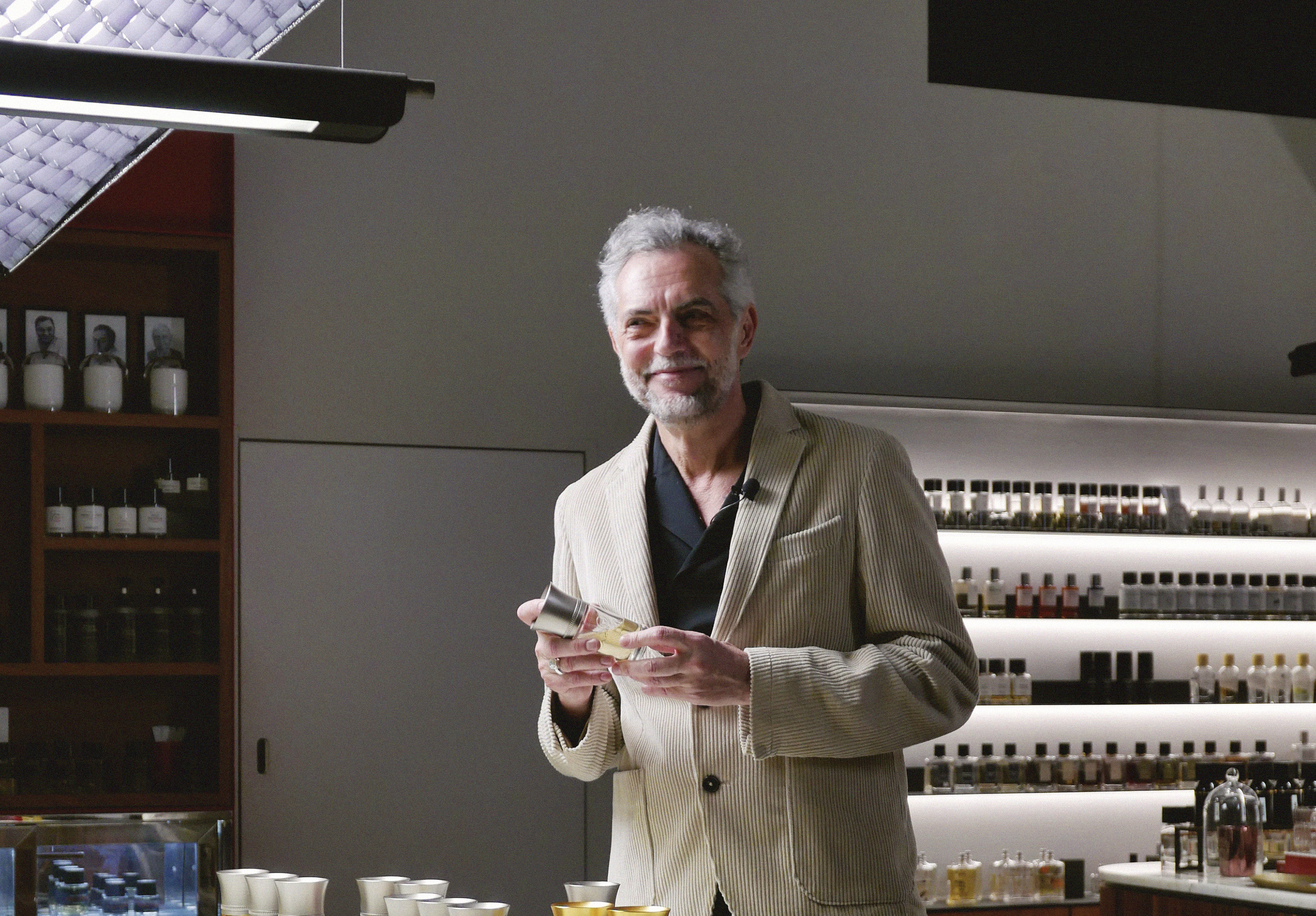
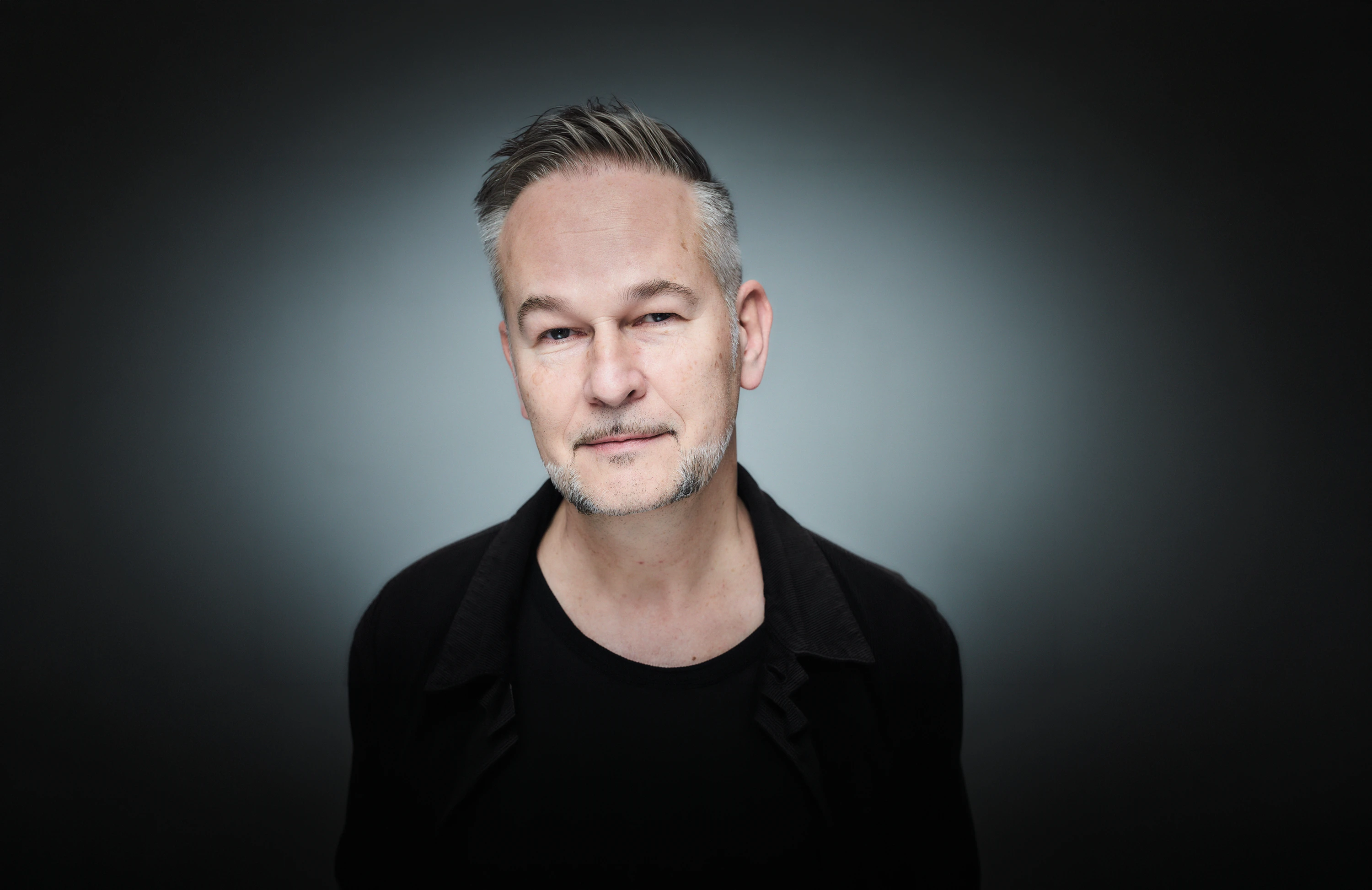
If I hadn't known who Philippe Di Méo is, the photos found online would have suggested he is certainly not a clerk, engineer, or IT specialist. Maybe an actor, maybe a set designer or a writer? The latter seemed plausible because under his name on Wikipedia there's the note: "Author of essays and translations. Teaches at the European Centre for Literary Translation in Brussels." But there was no portrait. That needs clarifying. At the meeting my interlocutor arrived grinning from ear to ear; I did not find the person from the online photos in him. That Philippe seemed studied, creating distance, dark. This one gave the impression of being unpretentious, open, and cheerful. Which one are you, Philippe?
Aside from perfumery, do you also translate Italian literature? I found such information on Wikipedia when I searched your name.
No, that's not me, although the other Di Méo also lives in Paris now. I don't know him, but once a publisher mistakenly sent me a book intended for him.
You could pass for Italian at first glance—carefully casual styling, Marni shirt, classic trousers, sporty shoes…
I was born in Marseille, where indeed many Italians live, but I am French. Although sometimes it feels like I perceive the world more Italianly. The French are conservatives—I definitely am not.
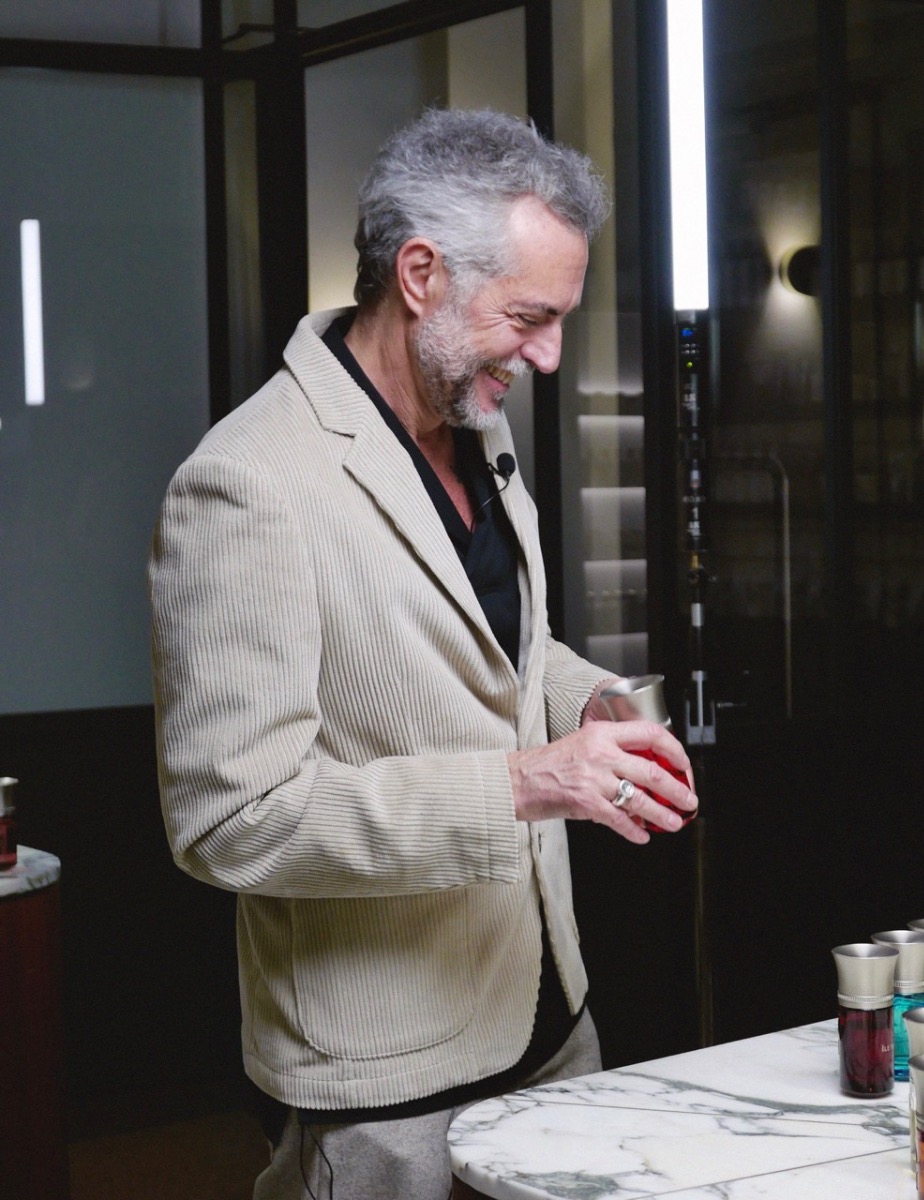
Before founding your perfume brand you worked in industrial design.
I trained as an architect and designer. For 25 years I ran my own agency. I focused on luxury goods and collaborated with brands like Dior, Guerlain, Dom Pérignon, Moët & Chandon. I always worked with the liquid aspect. But I never had a strict specialization—too many creative activities interest me for me to limit myself to one. I dealt with visual communication, exhibit design, furniture. For perfume houses I designed packaging—not bottles, but cartons for limited editions. I was never interested in standard, everyday items; I always operate outside the box.
One of the first ad campaigns for your brand had a painterly, Renaissance character. Which of the arts is closest to you?
Words affect me the most—naming everything I see, feel, and want to create. Although certainly photography, cinema, and painting do too. I like when my narrative is embodied, visualized in some way. Art affects me directly and deeply; it touches and moves me. For example, the poetry of Baudelaire…
Its pessimism, sadness?
Rather melancholy, although I also like the mystery and darkness lurking within it. In general I like contrasts—shadow as much as light. That's why my perfumes are poisons and antidotes.
Have you decided to translate any work of art into a scent?
The painting The Kiss of the Sphinx by Franz Ritter von Stuck inspired me to create a perfume that is no longer in the collection because it was too niche even for a niche (laughs). The dominating female Sphinx, who is unclear whether she is kissing or killing her lover. I translated that vision into a composition with a strong animalic character, with notes of fur. But it proved unacceptable to customers. It was different with Beauté du Diable—one of the bestsellers—which was also inspired by art, but cinematic. It was influenced by many images with monsters in the foreground, but most of all by Francis Ford Coppola's Dracula. What a romantic work! The main character is on one hand a dandy, a tender lover, and on the other—a monster. There is love, tearing, ecstasy, suffering. Light and darkness. In Beauté du Diable these translate to: ylang-ylang, lemon, geranium, gin, absinthe, guaiacwood.
Do you see such dualism in yourself?
I don't feel like a monster—I'm too kind, too calm for that. But when I was little I dreamed of becoming a werewolf. By day a man, at night a wolf, two lives in one.
With so many different interests, is it hard for you to focus solely on perfumery?
I have a lot of creative energy; I need variety. Perfumes give me that—I can design the bottle, the packaging, the ad campaign. The logo, the name, the descriptions, it's all my work. I don't compose the fragrances myself—I'm not a perfumer—but that doesn't mean I don't participate in the process.
How do you choose perfumers?
Most Liquides Imaginaires fragrances were created in collaboration with Givaudan (fragrance and flavor manufacturer – ed.). I work very well with them. After many years the specialists there know my brand and my universe well. I can even say I have a circle of perfumers there with whom I understand each other perfectly. I send them photos, moodboards. (Philippe shows me fantastic compositions on his smartphone meant to convey the mood of the perfumes). And of course the story of the scent. Did you notice there's a short story in the packaging? In 80% of cases its content exists before the scent itself is created.
Do you also choose the fragrance notes?
Always one ingredient that is the star.
Did you have that idea from the start or did it come over time?
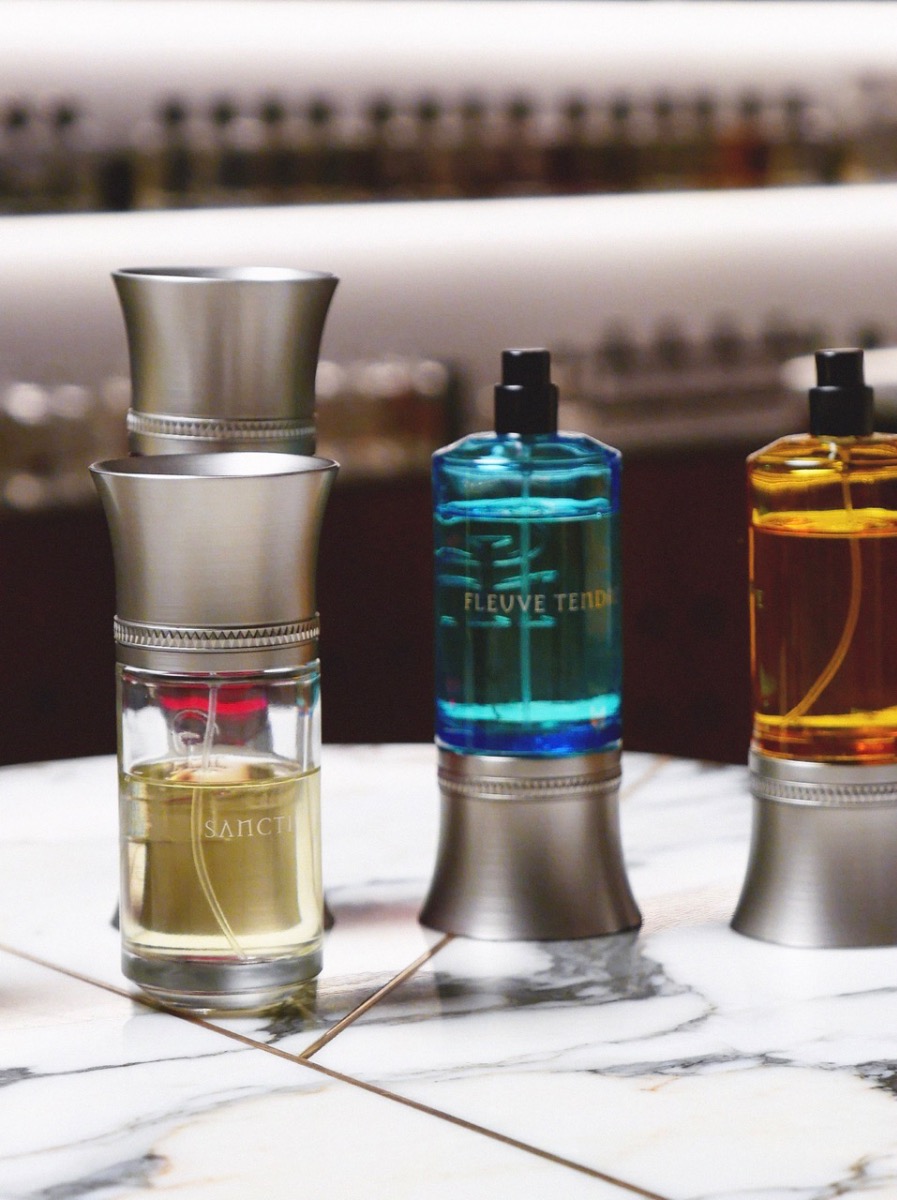
From the very first scent, Sancti. Do you know why I created those perfumes? To help myself. My apartment burned down, and I am a designer, someone deeply attached to material things, beautiful objects, art, clothes! Suddenly I lost it all.
A Buddhist liberation.
Maybe, but it was shock therapy. I didn't even have walls left because a chemical reaction in the fire caused the walls to run with a black, toxic liquid after the blaze was put out. I told myself I had to transform that nightmare into something positive. I wanted to be reborn from the ashes like a Phoenix. I redesigned myself from the past to the future. And I thought I'd create a perfume with incense, which in various religions has a purifying power. The leitmotif of Sancti is fragrant smoke—it's an ode to the sacred origins of perfume. I had already noticed that the big brands I worked with never told consumers about the origins of scents, about ancient Egypt, Greece, about human faith in the power of scent. I thought I could believe in it too. I needed something to calm the mind, illuminate the soul, and ward off bad energy. My personal holy water is Sancti. I wanted a modern version of incense, hence the idea to add fresh accords—bergamot, rosemary, cypress. Smelling them one can imagine being in Italy, but not in an old smoky church, rather outside, in a sunny town. What else was I thinking about besides cleansing? About strength, which I also needed then. That's how Fortis was born; it was meant to be like armor, to protect me. A magical liquid that would make whoever uses it strong. The most important ingredient of that perfume is dense, strong oud. To this day, when I have to face something difficult, I use Fortis—I feel as if I'm hiding under a solid shield.
You speak of the sacred origin of perfumes. Did that ever tempt you to create incense or candles instead of perfumes?
It was a reaction to working with famous perfume houses. I felt the dimension of the fragrances they created was too superficial, and I like depth, the mystical aspect. I wanted to prove that this could be achieved with perfumes.
Which noses do you understand best?
I worked on Sancti, Fortis, and Dom Rosa—our bestsellers—with Sonia Constant—she captured my ideas perfectly, but in 2022 she founded her own brand. The angelic-demonic scents were composed by Louise Turner.
Angelic-demonic?
Yes, inspired by the unicorn Blanche Bête, milky, with tuberose, musk, tonka bean and incense. These are perfumes whose creation was guided by the keyword innocence. And Beauté du Diable, pure temptation in liquid form.
I also like working with Quentin Bisch and Nisrine Bouazzaoui Grillié. Together they created, among others, Tapis Volant with bergamot, carrot seeds, iris and sandalwood. They have a very interesting collaboration model—Quentin starts and Nisrin finishes, refining. Recently I've also been working with a Polish perfumer who is studying at the Givaudan school—Jacek Leszczyński.
On which fragrance?
That's still a secret; I haven't told anyone about it.
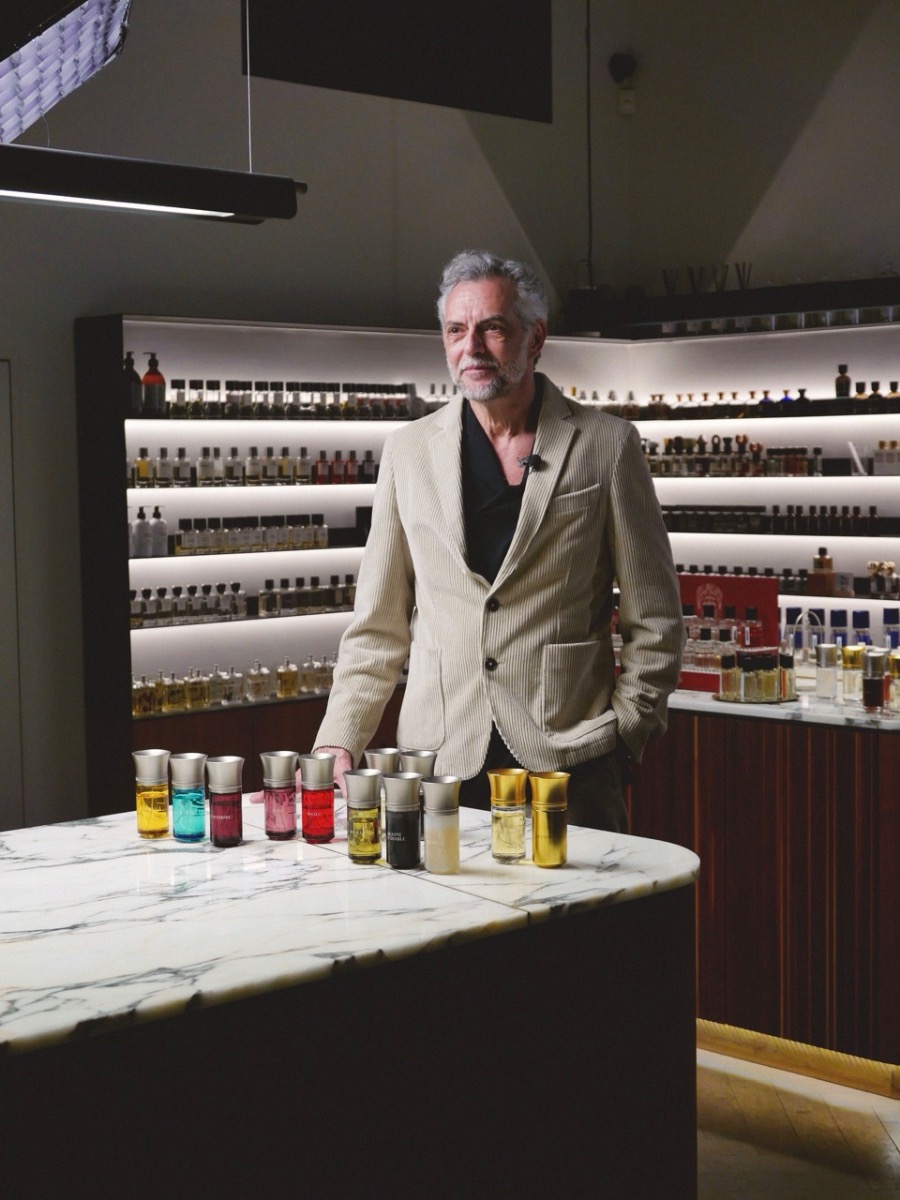
Liquides Imaginaires fragrances are arranged in sequences of three. They say God loves the Trinity. Do you?
It's a good number, symbolic, my lucky one. The triangle is perfect balance. In theater, literature, and painting the triad is important. Besides, a trilogy allows me to tell a full story. About strength and sensitivity, lightness and heaviness, complemented by a neutral aspect. Fortis is the scent of earth, Sancti of air, smoke, and Tumult is neutral, inspired by the fragrant steam rising during a bath. The whole triad refers to religion—not a specific one, but the concept of it. Through these perfumes we move from the sacred to the profane. My brand is called Liquides Imaginaires—I wanted imagination to be an ingredient of the liquids. I do what I can to awaken it. For example in the Les Eaux Imaginaires collection I take the user on a journey: to a desert oasis via Désert Suave, to a distant, lonely island thanks to Île Pourpre and finally to a river full of sensual energy – Fleueve Tendre.
Why is the liquid aspect so important in each of your scented stories?
It fascinates me. A liquid is a material we cannot hold in our hands; it will slip away. Maybe my birthplace—Marseille—and my fascination with the sea have something to do with it?
Since we're on the subject of the elusive, can you imagine scents created by AI?
The project I presented in April in Milan uses AI to create perfumes. Givaudan has artificial intelligence—Carto—and it is capable of creating fragrances of good quality. But we humans still have to steer it to achieve the right result. Remember, it's a machine; it doesn't have our sensitivity. Can it judge what we consider beautiful or not? The outcome will match the brief, but will we like it? Artificial intelligence is simply a new tool, and the creative process is very intimate. There is no intimacy in a machine.

































 Proceed to Checkout